


Catalan roasting art from the grill
Choosing the right wine to accompany a meal is the crowning glory of any culinary creation. Especially in Mediterranean cuisine, the interplay between wine and food is crucial for an authentic taste experience. Escalivada is a Catalan classic that captures the pure essence of summer. The vegetables, usually eggplants, peppers and onions, are roasted whole until the skin turns black, which gives them an incomparable smoky aroma. After peeling and deseeding, they are cut into strips and marinated with the best olive oil and a little garlic. The natural sweetness of the peppers contrasts beautifully with the tart notes of the eggplant. It is a dish that thrives on simplicity and product quality. The texture is soft and almost melting, which requires a fine balance on the palate. Whether as a starter or side dish, this dish brings the warmth of the Iberian peninsula directly to the dining table at home and enchants with its honest, unadulterated nature.
Ideal wine pairing: Xarel-lo DO Penedès (Catalonia, Spain)
The Xarel-lo from the Penedès is the ideal accompaniment, as it perfectly reflects the Mediterranean soul of Escalivada. This grape variety, which is often used for cava, is aged still with an impressive structure and an invigorating freshness. On the palate, the wine captivates with notes of fennel, green almonds and a subtle salty minerality that harmonizes wonderfully with the olive oil and roasted vegetable aromas. The acidity is present, but well integrated, so that it does not overpower the soft texture of the vegetables, but rather enhances them. As the escalivada develops a smoky sweetness through grilling, it needs a wine that is not too fruity, but rather convinces with its herbal spice and grounding. The dry profile of the Xarel-lo ensures that the palate is refreshed after every bite. The combination of Catalan vegetables and the local grape variety is a natural symbiosis that impresses with its regional ties and precise taste.
Further wine recommendations for this dish
Verdejo DO Rueda (Castile-León, Spain)
A Verdejo from the DO Rueda offers a wonderful alternative with its typical herbal aromas. On the nose, there are nuances of laurel, freshly cut grass and citrus fruits, which go perfectly with the garlic and olive oil of the Escalivada. The wine has a medium body and a slight bitter note on the finish, which is reminiscent of grapefruit and corresponds fantastically with the tart roasted aromas of the eggplant skin. The lively acidity structure ensures that the combination never seems heavy, even when the vegetables have been marinated generously in oil. Thanks to its freshness and mineral notes, Verdejo is a universal companion for summer vegetable dishes. It brings a certain effervescence that balances the sweet paprika flavor and makes the dish appear very lively and dynamic overall. This combination is a must for lovers of Spanish white wine culture who value aromatic depth.
Assyrtiko Santorini PDO (Cyclades, Greece)
This powerful white wine from the volcanic island of Santorini is a real statement for Escalivada. Assyrtiko is known for its almost steely acidity and pronounced salty minerality, which is directly reminiscent of the sea breeze. As escalivada is often served with salt flakes and intense olive oil, it finds an equal partner in this wine. The smoky notes of the grilled vegetables are perfectly picked up and supported by the sparse, stony structure of the wine. It has enough extract and concentration to stand up to the strong onion aromas without being drowned out. The fruit flavors tend to stay in the background, which draws the focus entirely to the texture and spicy components of the food. For connoisseurs looking for an exciting combination, this Greek classic is an excellent choice that takes the Mediterranean lifestyle to a new level and ensures a long-lasting taste experience.
Côtes de Provence AOC (Provence, France)
A dry rosé from Provence brings an elegant lightness to the arrangement. These wines, mostly made from Grenache, Cinsault and Syrah, are characterized by their pale color and fine berry fruit. Aromas of redcurrant and a hint of garrigue herbs complement the Escalivada in a very subtle and charming way. The cool freshness of the rosé provides a pleasant contrast to the warm or room-temperature vegetables. Particularly when the dish is garnished with anchovies or olives, the rosé shows its full strength and skillfully absorbs the salty spikes. The wine is very silky and unobtrusive on the palate, which is gentle on the delicate flavors of the peppers and eggplants. It is a very convivial combination that is perfect for an evening on the terrace and impresses with its uncomplicated yet high-quality style. The Provence style gives the Catalan dish an extra touch of summery sophistication.
Sauvignon Blanc Leyda Valley (Leyda Valley, Chile)
This Sauvignon Blanc comes from the cool coastal regions of Chile and is characterized by its explosive aromas of lime, green asparagus and passion fruit. These green and vegetal notes are a natural match for a pure vegetable dish such as escalivada. The crisp acidity of the Leyda Valley Sauvignon Blanc literally cuts through the oiliness of the dish and provides enormous clarity on the palate. It brings a modern, fruity component into play, creating an exciting contrast to the traditional, rather earthy preparation of the vegetables. The maritime character of the Chilean coast also lends the wine a fine mineral note that enhances the dish. This pairing is ideal for anyone who appreciates intense aromas and is looking for a wine that charges the dish with vibrant energy. The combination of South American freshness and Iberian tradition is a modern interpretation that impresses with contrast and harmony in equal measure.
Etna Bianco DOC (Sicily, Italy)
Etna Bianco, mostly made from the Carricante grape variety, grows on the volcanic soils of Mount Etna and has a fascinating depth. Its smoky, almost sulphurous minerality is perfect for the fire-roasted Escalivada. The wine smells of white flowers, lemon peel and wet stones, making it a very elegant accompaniment to the vegetables. It has a taut acid structure and good length, which works against the soft and sweetish textures of the onions and peppers. The complexity of Etna Bianco challenges the connoisseur and turns a simple starter into a culinary journey of discovery. The volcanic terroir of Sicily is reflected in the glass and finds its direct counterpart in the roasted aromas of the escalivada. It is an intellectual pairing for wine lovers who are looking for something special and want to enjoy the perfect combination of fire, earth and fruit.
The recipe:
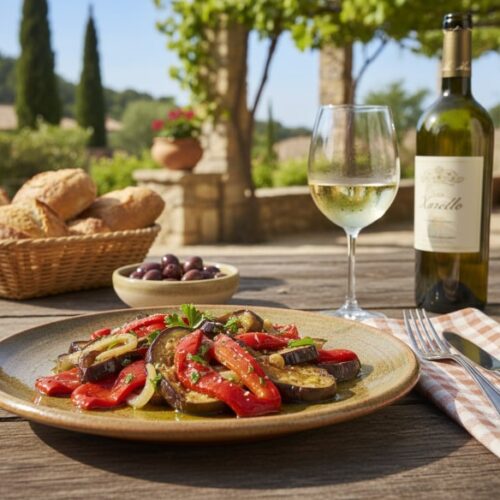
Escalivada (grilled vegetables)
Cooking utensils
- 1 Oven or charcoal grill
- 1 Baking tray
- 1 Cling film or a bowl with a lid
- 1 Sharp knife
- 1 Serving platter
Ingredients
Vegetable components
- 1 large eggplant
- 2 large red peppers
- 1 large vegetable onion
- 2 Garlic cloves finely chopped
Marinade and spices
- 4 Tbsp. high-quality olive oil extra virgin
- 1 teaspoon coarse sea salt
- Freshly ground black pepper
- A splash of sherry vinegar optional
Preparation
Roasting the vegetables
- Wash the vegetables and pat dry. Leave the onion unpeeled.
- Place the vegetables whole on a baking tray or on the grill.
- Roast in the oven at 220°C (top/bottom heat) for approx. 30-40 minutes, turning occasionally. The skin of the peppers may blacken and blister.
Skinning and shredding
- Place the hot vegetables in a bowl and cover with foil. Leave to rest for 10 minutes; the steam will help to loosen the skin.
- Peel the skin off the peppers and eggplants, remove the stalks and seeds. Remove the outer layer of the onion.
- Cut or tear the soft flesh into long, narrow strips.
Marinating and dressing
- Arrange the vegetable strips alternately on a platter.
- Sprinkle with the chopped garlic, drizzle generously with olive oil and season with salt and pepper.
- Leave to infuse for at least 30 minutes so that the flavors combine.
Recommended side dishes
- Freshly toasted farmer’s bread (Pan con Tomate)
- Pickled anchovy fillets (anchoas)
- Black olives from the region

