


Light, aromatic and Mediterranean – an Easter classic from Italian cuisine
If you are looking for a suitable wine accompaniment at Easter that combines lightness and depth at the same time, this dish is a real discovery. Wine with food here means: Mediterranean freshness meets hearty rusticity. Rabbit ragout with olives, lemon and polenta is a dish that has been served on the Easter table in Italy for generations – slowly braised, with the spice of the Mediterranean and the velvety richness of creamy polenta. The combination of tender rabbit meat, salty olives and the invigorating freshness of lemon results in an interplay of flavors that elegantly combines lightness and substance. Combining wine and food here means: a white wine that is suitable for the Mediterranean, mineral enough for the lemon and full-bodied enough for the ragout.
Ideal wine accompaniment: Vermentino di Sardegna DOC (Sardinia, Italy)
The calcareous and granitic soils of Sardinia characterize this Vermentino with an unmistakable combination of ripe citrus fruit, white peach and a characteristic hint of almond and sea salt. On the palate, it is full-bodied for a white wine, with a lively, almost salty minerality that directly picks up and extends the lemon notes of the ragout. The natural bitterness on the finish – typical of the variety – reflects the olives in a fascinating way and creates a connection that feels like an echo between glass and plate. The creamy polenta softens the acidity of the wine and makes every sip softer and more accessible. Served slightly chilled at 10-12 °C, it reveals its full Mediterranean potential – a wine that tastes of summer, sun and the Sardinian coast and turns the rabbit ragout into a real Easter experience.
Further wine recommendations for this dish
Vermentino di Gallura DOCG (Gallura, Sardinia, Italy)
The weathered granite soils of Gallura in northern Sardinia produce the most intense and complex Vermentino on the island. Ripe citrus fruit, peach, acacia blossom and a pronounced mineral salinity meet a palate of unusual density for a white wine. Gallura DOCG is the only DOCG in Sardinia – a sign of quality that is confirmed in the glass. The lemon notes of the ragout find their most direct counterpart in this wine, while the almond note on the finish builds an elegant bridge to the olives.
Soave Classico DOC (Soave, Veneto, Italy)
The volcanic basalt soils of the Classico core of Soave give this Garganega wine a minerality and depth that goes far beyond what the name suggests. White flowers, green apple, bitter almond and a subtle honey note meet a fresh, lively acidity that wonderfully accompanies the rabbit meat. The creamy polenta is perfectly complemented by the gentle richness of the Soave Classico – a classic of northern Italian cuisine that shows that Veneto and Easter belong together.
Greco di Tufo DOCG (Tufo, Campania, Italy)
The tufaceous soils around the village of Tufo in the heart of Campania give this wine its unmistakable mineral depth and a smoky, almost sulphurous note that sets it apart from all other southern Italian white wines. Ripe pear, white peach, chamomile and almond meet a powerful, structured acidity. The bitterness of the olives in the ragout is almost absorbed by the minerality of the Greco, while the lemon enlivens the freshness of the wine. A wine with character that is on a par with the dish.
Pouilly-Fumé AOC (Loire, France)
The Kimmeridge limestone soils around Pouilly-sur-Loire characterize this Sauvignon Blanc with a characteristic flinty minerality and an intensity that sets it apart from other Sauvignon Blancs in the world. Gooseberry, lemon zest, white asparagus and an unmistakable smoky nuance meet a precise, long-lasting acidity. The lemon notes of the ragout are mirrored by this wine in an almost elegant way – and the olives find a worthy interlocutor in its minerality. For all those who want to celebrate Easter with a wine that transcends borders.
Grüner Veltliner Wachau DAC (Wachau, Lower Austria, Austria)
The primary rock and loess soils of the Wachau characterize this Grüner Veltliner with its typical white pepper spiciness, combined with citrus freshness, green apple and an elegant mineral depth. The characteristic pepperiness is what makes this wine so exciting with rabbit ragout – it picks up on the herbal spiciness of the stew and gives the dish an additional aromatic dimension. The creamy polenta softens the acidity in a pleasant way. An Austrian classic that shows that the Wachau is one of the world’s great white wine regions.
You can find more inspiring ideas for wine to eat at Easter in our themed category – from classic Easter dishes to Mediterranean discoveries.
The recipe:
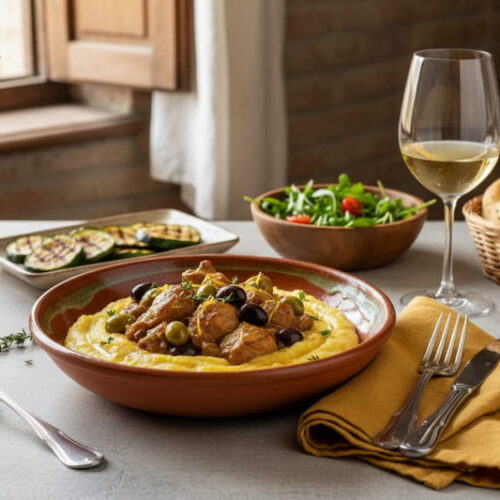
Tender rabbit ragout with olives, lemon and polenta
Cooking utensils
- 1 Casserole or roasting pan with lid
- 1 Cutting board
- 1 Knife
- 1 Zest grater
- 1 Wooden cooking spoon
- 1 Pot for the polenta
- 1 Whisk
Ingredients
- 1 Rabbit cut into pieces approx. 800 g
- 100 g green olives without stone
- 100 g Black olives without stone
- 1 untreated lemon Juice and zest
- 200 ml dry white wine Vermentino
- 300 ml Chicken stock
- 2 Garlic cloves
- 1 Onion
- 2 Sprigs of rosemary
- 3 Sprigs of thyme
- 2 1 tbsp olive oil
- Salt black pepper
- 200 g Polenta coarse
- 600 ml Water or chicken stock
- 30 g Butter
- 50 g Parmesan cheese Freshly grated
- Salt Nutmeg
Preparation
PREPARATION:
- Season the rabbit pieces with salt and pepper.
- Finely dice the onion.
- Press in the garlic.
- Wash the lemon, grate the zest and squeeze out the juice.
- Roughly chop the olives.
COOKING STEPS:
- Heat the olive oil in a roasting pan over a medium-high heat.
- Fry the rabbit pieces on all sides until golden brown – approx. 3-4 minutes per side.
- Remove the meat and set aside.
- Sauté the onion and garlic in the same fat until translucent.
- Pour in the white wine and dissolve the drippings.
- Add the stock, lemon juice and zest.
- Pickle the rosemary and thyme.
- Put the rabbit pieces back into the roasting tin.
- Cover and braise at 160 °C fan oven for approx. 1 hour 15 minutes.
- After 45 minutes, add the olives.
- Shortly before the end of cooking, remove the lid and allow the sauce to reduce slightly.
- Bring the water or stock for the polenta to the boil.
- Salting.
- Stir in the polenta.
- Cook over a low heat for approx. 10-15 minutes, stirring constantly.
- Work in the butter and parmesan.
- Season to taste with salt and nutmeg.
DIRECTIONS:
- Place the creamy polenta in the center of the plate.
- Arrange the rabbit pieces on top or next to it.
- Pour the sauce generously with the olives.
- Sprinkle with fresh thyme leaves and a little lemon zest.
- Serve immediately.
SUPPLEMENTS:
- Grilled zucchinis with olive oil and sea salt
- Rocket salad with cherry tomatoes and lemon dressing
- Focaccia with rosemary and coarse sea salt

