

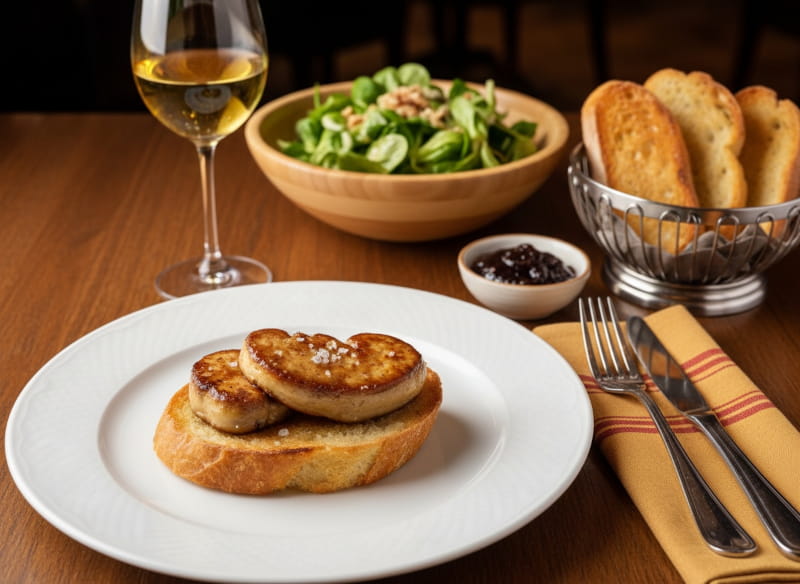
The luxurious delicacy from the culinary heart of southwest France
If you are looking for the perfect wine to accompany one of the world’s most exclusive starters, there is no way around foie gras. The theme of wine and food finds its absolute perfection here, as the creamy texture of duck liver presents a sensory challenge that demands an equal partner. In the Bordeaux hinterland, this specialty has been cultivated for centuries and is usually prepared very simply so as not to distort the melting texture and deep aroma of the product. Whether as a terrine or briefly pan-fried, foie gras de canard impresses with its butter-soft texture and subtle sweetness, which is perfectly accentuated by a pinch of fleur de sel and a little pepper. The choice of accompaniment is crucial to absorb the richness of the liver and to enliven the palate for the next bite. It is a culinary experience that combines elegance and tradition, building a bridge between the opulence of the plate and the complexity of the glass, with the aromatic harmony creating an incomparable depth.
Ideal wine accompaniment: Sauternes AOC (Bordeaux, France)
A Sauternes AOC is the ideal answer to foie gras de canard (goose or duck liver). This world-famous noble sweet wine from the Bordelais represents the classic contrast that is considered one of the most sacred pairings in fine dining. On the nose, the Sauternes develops intense aromas of dried apricots, honey and exotic fruits, which correspond wonderfully with the nutty sweetness of the duck liver. As foie gras has an extremely high fat content, the dense sweetness and vital acidity of a Sauternes are needed to create a balance on the palate. The wine’s botrytis notes add an extra dimension of complexity to the combination, which comes into its own with roasted liver and its roasted aromas. It is a regional pairing in a class of its own, in which the richness of the wine and the creaminess of the liver merge into a majestic whole. The long-lasting and concentrated finish ensures that the fine melting notes of the foie gras and the noble sweetness of the wine caress the palate in a luxurious finale.
Further wine recommendations for this dish
Tokaji Aszú (Tokaj, Hungary)
This legendary sweet wine from Hungary offers a fascinating alternative that impresses with its unique balance of massive residual sweetness and extremely high acidity. A Tokaji Aszú brings notes of orange marmalade, ginger and dried figs, which go phenomenally well with foie gras de canard. The vibrant acidity of this wine is able to break through the fat of the liver even more precisely than many other sweet wines, which makes for an amazingly fresh mouthfeel. Especially when the liver is served with a fruit component such as fig jam, the spicy honey notes of Tokay harmonize perfectly with the dish. It is a historic choice for connoisseurs looking for an accompaniment with plenty of energy and an almost infinite aromatic depth that supports the luxurious character of the duck liver and enhances it with a fine minerality on the finish.
Pfalz Riesling Auslese QbA (Pfalz, Germany)
A noble sweet Riesling Auslese from the Palatinate offers a delicate and elegant German answer to foie gras. The wine captivates with a cool fruit of peach and ripe pineapple, paired with a racy acid structure that is typical of Riesling. This acidity acts like a sharp knife, cutting through the creaminess of the duck liver and immediately freeing the palate for the next moment of pleasure. The subtle sweetness of the Auslese underlines the liver’s delicate aroma without overpowering it. The smoky nuances in particular, which Palatinate Rieslings often bring with them due to their red sandstone soils, correspond excellently with briefly fried pieces of liver. It is a very harmonious wine pairing that focuses on finesse and precision and gives the dish an almost floating lightness, while the fruit aromas provide a playful finish.
Alsace Gewurztraminer AOC (Alsace, France)
A Gewurztraminer from Alsace is an aromatic and less sweet alternative that shines with its floral extravagance. The characteristic aromas of rose petals, lychee and cloves form an intense partner for the spicy side of Foie Gras de Canard. As this wine often has a fuller body and an oily texture, it blends perfectly with the melting of the liver. Although it usually has less acidity, its bitter spiciness on the finish provides an exciting contrast to the fat of the dish. An excellent choice for lovers of wines with a strong personality that showcase the foie gras in an exotic light. This pairing is particularly successful when the liver is served with spiced bread or brioche, as the spicy facets of the wine complement these components perfectly.
Monbazillac AOC (Southwest France, France)
Monbazillac is the direct neighbor and often cheaper brother of Sauternes and also comes from the region south of Bordeaux. It is made from the same grape varieties as Sémillon and Sauvignon Blanc and offers very similar characteristics with notes of ripe peach, honey and light flowers. It is an authentic choice for a classic foie gras de canard as it perfectly embodies the rustic elegance of the hinterland. The wine has a wonderful fullness and a velvety sweetness that harmoniously absorbs the salty element of the liver. The good structure of Monbazillac ensures that it can also hold its own against more strongly flavored terrines. It is a traditional and down-to-earth wine recommendation that shows how closely the culinary history of the region is interwoven with its wines and makes for a full-bodied experience.
Vouvray Moelleux AOC (Loire, France)
A noble sweet Vouvray from the Chenin Blanc grape brings its own fascinating dynamic to the pairing. This wine from the Loire is famous for its aromas of quince, honeycomb and an almost electrifying acidity, which creates enormous tension even when it is very sweet. It offers a partner to foie gras that impresses with its clarity and purity. The fine minerality of the wine forms a wonderful contrast to the richness of the duck liver. The quince aroma in particular harmonizes excellently with the earthy taste of the liver. A sophisticated choice for connoisseurs looking for an accompaniment that not only impresses with sweetness, but above all with structure and a brilliant balance of acidity and sweetness, which interprets the dish in a very modern and precise way and ensures a long, clear finish.
The recipe:
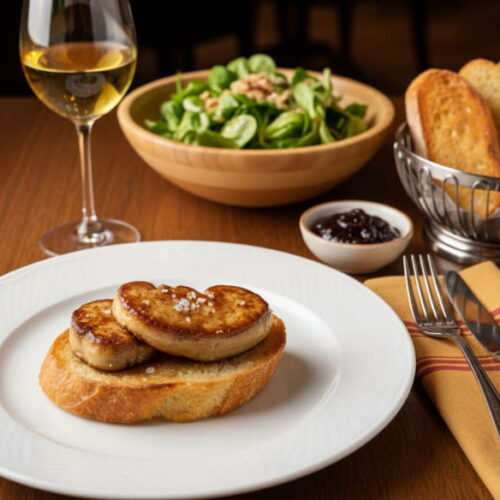
Foie gras de canard (fried duck liver)
Cooking utensils
- 1 Coated pan
- 1 Sharp knife
- 1 Kitchen paper
- 1 spatula
Ingredients
- 4 Slices of fresh duck liver approx. 60 g each, well chilled
- Coarse sea salt Fleur de Sel
- Black pepper from the grinder
- 2 Slices of brioche
- Some flour optional
Preparation
PREPARATION:
- The duck liver slices must come straight from the fridge.
- Lightly score the surface crosswise with a sharp knife.
- Pat the slices dry on kitchen paper.
- Toast the brioche in a toaster or in the oven until golden brown.
- Prepare the fleur de sel and pepper.
COOKING STEPS:
- Heat the pan without fat over a high heat until very hot.
- Optionally, lightly dredge the liver slices in flour and pat down.
- Carefully place the slices in the hot pan.
- Sear on the first side for approx. 60 to 90 seconds.
- The escaping fat is completely normal and intentional.
- Carefully turn the slices.
- Fry for a further 45 to 60 seconds on the second side.
- The center should still be pink and soft.
- Remove the pan from the heat immediately.
DIRECTIONS:
- Drain the fried slices briefly on kitchen paper.
- Place the toasted brioche on the plates.
- Carefully place the foie gras on the brioche.
- Immediately sprinkle with fleur de sel and fresh pepper.
- Garnish with a few drops of old balsamic vinegar if desired.
- Serve immediately while the liver is hot.
SUPPLEMENTS:
- Toasted brioche
- Fig jam
- Lamb’s lettuce with walnut dressing

