


The sweet classic with the crispy caramel topping
The right wine with a meal is what makes the end of a Catalan meal a perfect experience. In the world of wine and food, crema catalana is one of the most traditional desserts, with its creamy texture and hard sugar coating. Unlike French crème brûlée, it is not thickened in a bain-marie but on the stove with corn starch and refined with the aromas of lemon, cinnamon and vanilla. The art lies in finding the perfect balance between the cool, soft cream and the hot, crunchy caramel crust. This contrast challenges the senses and calls for an accompaniment that both absorbs the sweetness and supports the spicy components. A dessert that radiates warmth and freshness at the same time and should not be missed on any festive occasion in Spain. The preparation requires a little patience when stirring, but the result rewards with an incomparable richness of flavor that caresses the palate and makes the heart of every gourmet beat faster. The golden yellow color of the cream and the shiny caramel are also a visual highlight on any table.
Ideal wine pairing: Cava Semi Seco DO (Catalonia, Spain)
A Cava Semi Seco is the classic and most brilliant choice for this dessert, as its fine perlage softens the creamy texture of the Crema Catalana. The residual sweetness of the Semi Seco creates a harmonious combination that does not compete with the sweetness of the caramel, but rather elegantly underlines it. The brioche notes and the fine yeast characteristics of the cava, which are the result of traditional bottle fermentation, wonderfully pick up on the roasted aromas of the burnt sugar. At the same time, the moderate acidity of the sparkling wine ensures that the palate is refreshed after every spoonful of the rich egg yolk cream. On the nose, there are often nuances of dried fruit and honey, which correspond perfectly with the aromas of cinnamon and lemon zest in the dessert. It is a play of textures and temperatures in which the cool, sparkling cava forms the ideal counterpoint to the warm caramel layer. This turns a simple dessert into a festive moment that perfectly combines Catalan joie de vivre and wine culture and rounds off the evening. The effervescence of the cava also has an invigorating effect and prevents the sweetness of the dish from having a filling effect.
Further wine recommendations for this dish
Grüner Veltliner Wagram Eiswein (Lower Austria, Austria)
An ice wine from the Grüner Veltliner variety offers exceptional concentration and a natural fruit sweetness that perfectly complements the intense vanilla note of the Crema Catalana. The characteristic spiciness of the Veltliner, often perceptible as fine white pepper, provides an exciting accent to the sweet caramel crust. Due to the frost-induced concentration of aromas on the vine, the wine develops notes of exotic fruits such as mango and pineapple, which complement the citrus notes of the cream wonderfully. The vital acidity structure of the ice wine prevents the combination from being too powerful and ensures a long-lasting, fresh finish. It is a meeting of two worlds, where the cool precision of the Austrian Prädikat wine meets the warm opulence of the Catalan dessert art, creating a highly complex flavor profile. The viscosity of the wine gently envelops the cream and makes the caramel appear even more intense on the finish.
Mosel Riesling Auslese (Mosel, Germany)
A Riesling Auslese from the Mosel is an excellent choice due to its delicate interplay between sweetness and acidity. The slate minerality of the soil lends the wine a lightness that is very beneficial to the rich cream of milk and egg yolk. The nose reveals aromas of ripe apricots and acacia honey, which gently envelop the cinnamon aromas of the Crema Catalana. Mature Auslese wines in particular often develop a fine petrol note, which harmonizes fascinatingly with the smoky nuances of the flambéed sugar. The low alcohol content of these wines also ensures that the dessert is not weighed down, but retains a floating elegance. This combination underlines the finesse of both components and proves that top German wines can also cut a first-class figure in Mediterranean dessert cuisine. The vibrant acidity of the Auslese perfectly balances the fatness of the egg yolk.
Sauternes AOC (Bordeaux, France)
Probably the most famous sweet wine in the world, Sauternes offers an opulent accompaniment that is on a par with Crema Catalana in terms of intensity. Due to the influence of the noble rot Botrytis, the wine develops complex notes of candied orange, saffron and honey. This world of aromas literally merges with the lemon zest and vanilla in the cream. The silky texture of the wine envelops the palate like a protective film and makes the crunchy caramel layer stand out even more. Despite its high sweetness, a good Sauternes has a supporting acidity that stabilizes the pairing. The roasted aromas of the wine, which often result from ageing in barriques, find their counterpart in the bittersweet note of the burnt sugar. It is a luxurious combination that is predestined for special occasions and raises the depth of the Catalan classic to a new level.
Tawny Port 10 Years Porto DOC (Douro, Portugal)
A Tawny Port with its characteristic amber color and oxidative notes is a classic partner for desserts with caramel. The aromas of dried figs, walnuts and roasted almonds in the port wine complement the caramelized sugar crust of the Crema Catalana in a very natural way. As a Tawny has an integrated sweetness and a velvety texture, it adapts perfectly to the creaminess of the dessert. The subtle notes of Christmas spices in the wine pick up on the cinnamon in the recipe and enhance the comforting warmth of the dish. The strength of the fortified wine ensures that the aromas remain on the palate long after swallowing and form a harmonious unit with the vanilla cream. The slightly nutty component in the finish provides a successful contrast to the freshness of the lemon.
Muscat WO Constantia (Constantia, South Africa)
This historic sweet wine from the Cape of Good Hope has a floral freshness and enormous concentration. The aromas of rose petals, lychees and ripe orange marmalade form an exotic contrast to the more classic spiciness of Crema Catalana. The natural acidity of the Muscat keeps the wine lively and animating on the tongue despite its density. A firework of spices and fruit unfolds on the palate, beautifully framing the lemon and cinnamon in the dessert. The long tradition of this wine reflects the artisanal quality of Crema Catalana. The combination creates an exceptional tasting experience that combines the sun of South Africa and the tradition of Spain in a harmonious interplay. It is a bold choice for connoisseurs who are looking for something special and appreciate the aromatic diversity of the Muscat grape.
The recipe:
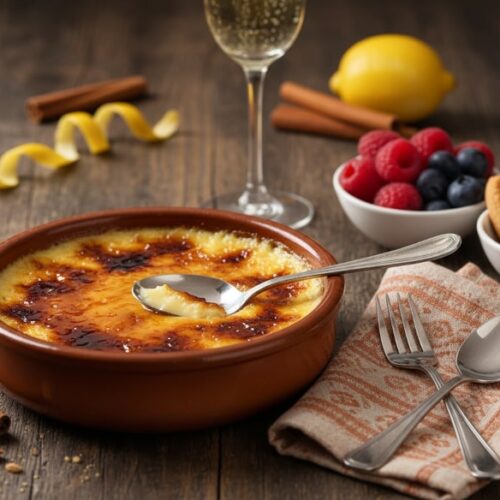
Crema Catalana
Cooking utensils
- 1 Small saucepan
- 1 Whisk
- 1 Two fireproof clay bowls or ramequins
- 1 Flambé burner (kitchen burner)
- 1 Fine kitchen strainer
- 1 Mixing bowl
Ingredients
The cream
- 500 ml Whole milk at least 3.5 % fat
- 4 Egg yolks Size M
- 100 g fine white sugar
- 20 g Corn starch e.g. Mondamin
- 1 Stick of cinnamon
- zest of half an organic lemon only the yellow part
- 1 teaspoon vanilla extract or the pulp of half a pod
The crust
- 4 Tbsp brown cane sugar or fine white sugar
Preparation
Flavoring milk
- Pour about 400 ml of the milk into a pan with the cinnamon stick, lemon zest and vanilla. Slowly bring to the boil, then immediately remove from the heat.
- Leave the mixture to infuse for about 10 minutes so that the flavors infuse into the milk. Then remove the cinnamon stick and lemon zest.
Mixing the base
- In a bowl, beat the egg yolks with the sugar until the mixture turns pale yellow.
- Stir the remaining 100 ml of cold milk with the cornstarch in a glass until smooth and no lumps remain.
- Now stir the starch mixture into the egg yolk mixture.
Cook cream
- Slowly pour the still warm flavored milk into the egg yolk mixture, stirring constantly.
- Pour the entire mixture back into the saucepan. Heat over a low to medium heat, stirring constantly with a whisk.
- The cream must not boil, otherwise the egg yolk will curdle. Stir until the mixture thickens noticeably.
Chilling and serving
- Pass the finished cream through a fine sieve and pour into the bowls. Leave to cool to room temperature and then place in the fridge for at least 4 hours (preferably overnight).
- Just before serving, spread the sugar evenly over the cream and caramelize with a flambé burner until golden brown.
Recommended sides:
- Fresh berries (raspberries or blueberries)
- A small dollop of unsweetened whipped cream
- Catalan almond cookies (carquinyolis)

