


Creamy risotto as a stage for fine seasonal ingredients
Wine with food sometimes means being inspired by the cuisine of northern Italy – and nowhere does this work as elegantly as with asparagus risotto. Finding the right wine to accompany this dish is an art in itself: the creamy Arborio risotto with white asparagus and black truffle is opulent, rich and of a complexity that few other asparagus dishes can match. The white asparagus brings subtle bitter notes and a delicate sweetness, the black truffle its irresistible earthiness. In between: Butter, parmesan, dry white wine. Combining wine and food is particularly successful with a well-aged Burgundy Chardonnay – it brings body and complexity without masking the fine aromas.
Ideal wine accompaniment: Bourgogne Blanc AOC (Burgundy, France)
Light gold in the glass, a bouquet of ripe apples, white pears, roasted hazelnuts and a hint of fresh butter – these characteristics are the hallmarks of the classic Burgundy chardonnay. The racy acidity is combined here with a creamy texture that almost mirrors the risotto on the plate. The ageing in oak barrels brings vanilla and toasted notes into play, which harmonize with the Parmesan and elegantly frame the earthy, intense truffle note. A Bourgogne Blanc AOC aged for at least two years shows these characteristics at their best: The texture is rounder, the aromas more complex, and the harmony with the truffle takes on almost meditative qualities. The terroir of the Côte de Beaune is clearly noticeable in these wines – mineral, cool and characterized by a long winemaking tradition.
Further wine recommendations for this dish
Viognier AOC Condrieu (Northern Rhône, France)
Apricot, peach, white flowers and a hint of ginger – this variety is not a quiet companion, but a powerful soloist that holds its own beautifully alongside truffles and Parmesan. The characteristic richness and oiliness of Viognier in the mouth combines wonderfully with the creamy risotto base. The floral aromas play a subtle contrast to the earthy truffle notes and emphasize the sweetness of the white asparagus. With its relatively low acidity and long, spicy finish, this wine is an unforgettable companion for particularly festive asparagus evenings. A small, exclusive growing region – and you can taste it in every sip.
Pinot Gris Spätlese dry (Palatinate, Germany)
From ripe pears, quinces and golden mirabelle plums to fine almond notes and a warm, almost honey-like fullness – German Pinot Gris are the charming answer to great white Burgundies. Palatinate specimens from first-class vineyards develop a texture that comes surprisingly close to Chardonnay from Burgundy: lush, soft, with a lot of melting. A truffle risotto needs precisely this quality – the silky, creamy body that nestles into the rice sauce as if it had always been there. The natural ripeness of the Palatinate climate gives these wines a warmth and depth that you can immediately feel in the glass.
Soave Classico DOC (Veneto, Italy)
Creamy almond milk, white flowers and the typical, slightly bitter finish of the Garganega grape – Soave Classico is one of Italy’s most underrated white wines and a surprisingly good partner for northern Italian risotto specialties. The combination of volcanic soils around Soave and the cooler climate of the Classico zone produces wines with lively acidity and an almost salty minerality. This wine brings an authentic Italian voice to the combination with risotto – and this harmony is clearly noticeable in the taste. It unfolds its full harmony especially with risottos with parmesan and butter, because it elegantly balances out the milkiness.
Chenin Blanc AOC Vouvray (Loire, France)
Honeydew melon, quince jelly, fresh mushrooms and a characteristic waxy note – Chenin Blanc from Vouvray is one of the longest-lived and most complex white wines in the world. In its dry version, it brings a tension between ripe richness and taut acidity that is ideal for an opulent risotto with truffles. As Vouvray matures, it develops fermented honey aromas, mushroom notes and walnut accents – a direct aromatic bridge to the world of truffles. If you open an older Vouvray dry with asparagus truffle risotto, you will experience a combination that is hard to beat in its complexity.
Chardonnay Sonoma Coast AVA (Sonoma, USA)
A cooler climate, Pacific fog winds and chalky soils give the Chardonnay from the Sonoma Coast an elegance and minerality that clearly places it close to European models. Citrus peel, green apple, flint and a subtle use of wood result in a wine that combines structure and freshness. For an asparagus risotto with truffles, a well-made Sonoma Coast Chardonnay offers the necessary textural richness and enough acidity to lighten the creaminess of the risotto. This wine is the cosmopolitan choice – perfect for anyone who likes to push boundaries when it comes to food.
For more inspiration on classic wine pairings with asparagus, visit our overview page on asparagus and wine.
The recipe:
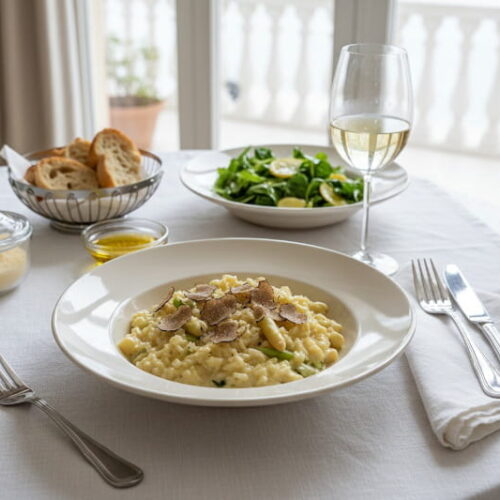
Asparagus risotto with white asparagus and black truffle
Cooking utensils
- 1 Large pot for vegetable stock
- 1 Medium sauté pan or risotto pan
- 1 Wooden cooking spoon
- 1 Asparagus peeler
- 1 Truffle slicer or microplane grater
- 1 Small pot to keep the broth warm
- 1 Preheated deep plates
Ingredients
For the risotto:
- 200 g Arborio or Carnaroli rice
- 1 Shallot finely diced
- 1 Garlic clove finely chopped
- 150 ml dry white wine Bourgogne Blanc
- 800 ml hot vegetable or chicken stock
- 60 g Cold butter in cubes
- 60 g Parmesan cheese Freshly grated
- 2 Tbsp extra virgin olive oil
- 20 g black truffle fresh or in glass
- Salt and white pepper
For the asparagus:
- 500 g white asparagus
- 1 teaspoon salt
- 1 tsp sugar
- 1 Tbsp butter
Preparation
PREPARATION:
- Peel the white asparagus from the head to the base and cut off the woody ends.
- Cut the asparagus spears into 3 cm long pieces – keep the heads separate.
- Finely dice the shallot and garlic.
- Keep the stock warm in a small saucepan – it should never boil, only steam.
- Cut the cold butter into cubes and store in the fridge.
COOKING STEPS:
- Heat the olive oil in the risotto pan over a medium heat.
- Sauté the shallot until translucent, then briefly add the garlic.
- Add the rice and stir-fry for 2 minutes until translucent.
- Deglaze with the white wine and allow to simmer while stirring.
- Add the asparagus pieces (without the heads) to the rice.
- Add the stock ladle by ladle – only when the liquid has almost been absorbed.
- After 15 minutes, add the asparagus heads and cook.
- After a total of 18-20 minutes, the rice should be al dente.
- Switch off the stove.
DIRECTIONS:
- Stir in the cold butter cubes (mantecatura) – vigorously and quickly until the risotto is smooth and creamy.
- Stir in the parmesan and season to taste.
- Immediately pour the risotto into preheated deep plates.
- Slice the truffles into wafer-thin slices with the slicer directly above the plate.
SUPPLEMENTS:
- Green leaf salad with lemon dressing
- Crispy ciabatta with olive oil
- Freshly grated Parmesan cheese to serve

