

Wine & Food from Southern France – Garrigue, Cassoulet, and France’s Largest Wine Region
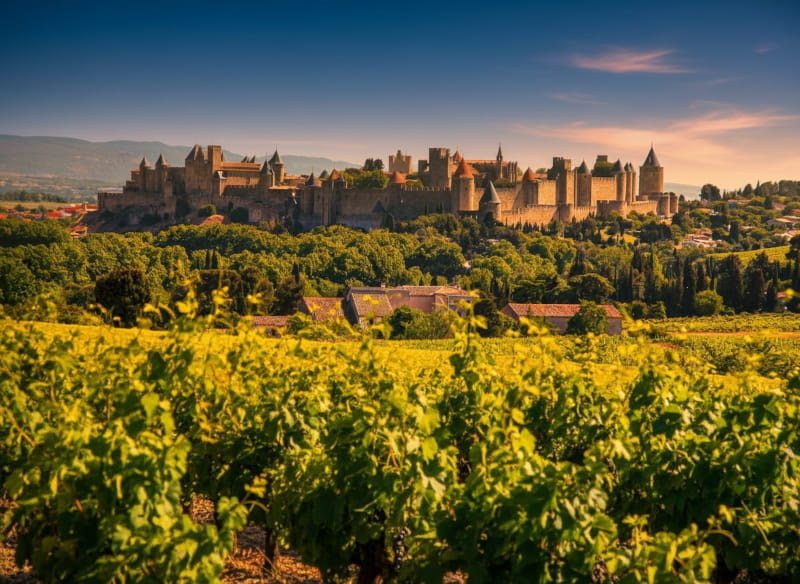
The Languedoc is the forgotten France—forgotten by those who, when they think of the South of France, picture rosé from Provence, bouillabaisse from Marseille, and the lavender fields you see on postcards. The Languedoc is different: rougher, more authentic, less concerned with appearances. The narrow streets of Carcassonne, the rugged vineyards of Faugères on slate rock, the Étang de Thau with its oyster beds, the Mediterranean, which is shallower and saltier here than on the Côte d’Azur—this is a region that derives its self-confidence not from tourism, but from cassoulet, to which it has been devoted since the Middle Ages.
It is France’s largest wine-growing region—covering an area larger than Bordeaux and Burgundy combined—and yet it is also the most underrated. While Bordeaux is loved for its reputation and Burgundy for its scarcity, the Languedoc produces France’s most honest wines: Grenache, Syrah, Mourvèdre, and Carignan on slate, clay, and limestone; Picpoul and Clairette as the most distinctive white wines of the Mediterranean arc; Blanquette and Crémant de Limoux as the world’s oldest sparkling wines; and the small Muscat Vins Doux Naturels as the friendliest dessert wines an evening can offer. In the Languedoc, pairing wine and food means drinking the right thing with conviction—no matter what the world thinks of the South.
Wine Culture in Languedoc
Languedoc is not a newcomer to the world of wine. The Greeks brought the vine to this coast long before the Romans, who then made Narbonne the first provincial capital outside of Italy and thus established the first organized wine trade beyond the Alps. The region’s wine culture is two thousand years old—and for most of that time, it was about mass production: France’s bulk wine, which filled Parisian bistros and was considered a simple commodity. That changed dramatically in the last quarter of the twentieth century.
The appellation-driven quality revolution began in the 1980s, when a generation of winemakers —many of them newcomers from Paris or Lyon—realized that the old Carignan vines on the slate slopes of Faugères or the Grenache vines in the windswept garrigue terroirs of the Corbières had potential that mass production failed to do justice to. Today, the Languedoc is where France’s most exciting wine discoveries are taking place: Pic Saint-Loup for elegant reds with a cool character; Terrasses du Larzac for complex high-altitude wines; Minervois-La Livinière as a Cru appellation with mineral character; and everywhere, the return to the Carignan grape, long considered a mass-produced variety and now, cultivated on old vines, rediscovered as a garrigue expression of exceptional depth.
Appellations & Grape Varieties
White wine
- Picpoul de Pinet AOC is the most famous white wine appellation in the Languedoc and, at the same time, the most distinctive: a single grape variety—Picpoul Blanc—grown in a small, enclosed area directly on the Étang de Thau, the lagoon between Sète and Agde. The name translates roughly to “lip-pricker”—a reference to the pronounced acidity that the grape variety naturally possesses. In the glass, Picpoul de Pinet is dry, slender, and lively with acidity, featuring notes of lemon, green apple, a hint of almond, and a salinity derived from its proximity to the Étang de Thau. It is the classic oyster wine of southern France and, outside of this pairing, one of the most underrated white wine discoveries in the Mediterranean region.
- Faugères AOC Blanc —the white version of the schist appellation—is fuller-bodied and more aromatically complex than Picpoul: Grenache Blanc, Roussanne, and Marsanne grown on the mineral-rich schist of the Cévennes, with notes of pear, almond, and herbs, and a waxy, full-bodied texture that’s perfect for fish dishes and brandade.
- Clairette du Languedoc AOC —the region’s oldest white wine appellation—is made from the Clairette grape, which was long used in Languedoc as a base for sparkling wine and today, as a still wine, offers an oxidative, nutty character: quince, almond, and a hint of wax. Rare and for those seeking the unusual.
- La Clape AOC Blanc —from the coastal appellation near Narbonne—is made primarily from Bourboulenc grapes, offering a herbaceous, spicy minerality derived from the limestone massif right on the Mediterranean coast.
Red wine
- Faugères AOC —grown entirely on slate—is the most elegant and mineral-driven red wine appellation in the Languedoc. Grenache, Syrah, and Mourvèdre grown on the black slate of the Cévennes foothills produce wines with dark berry fruit, lavender, garrigue, and a metallic-mineral spice that no other Languedoc soil delivers so distinctly. Producers such as Léon Barral, Domaine Canet-Valette, and Mas d’Alezon demonstrate this potential.
- Saint-Chinian AOC —located north of Faugères, with a variety of soils ranging from slate (in the north) to clay-limestone (in the south)—produces two stylistically distinct red wines: mineral-driven, cool slate vineyards in the north, and fuller-bodied, warmer limestone vineyards in the south. Grenache, Syrah, Mourvèdre, and Carignan.
- Minervois AOC —one of the largest and best-known appellations—is warmer, sunnier, and south-facing: full-bodied reds made from Grenache, Syrah, Mourvèdre, and Carignan with ripe fruit, thyme-like spice, and a body made for braised meat dishes. Minervois-La Livinière AOC is the cru within the Minervois—higher in elevation, cooler, more mineral-driven, and more structured.
- Corbières AOC —the largest appellation in the Languedoc in terms of area—is so diverse in its soils that it is difficult to define it by a single style: 11 subzones, ranging from the coast to the high mountains, from marine clay to slate-limestone. Carignan plays a key role here—old vines, over 40 years old, produce wines with a richness and depth that the grape variety never displays elsewhere. Corbières-Boutenac AOC is the cru offshoot with a focus on Carignan.
- Fitou AOC —the oldest appellation in the Languedoc (1948)—is primarily made from Carignan and Grenache and produces full-bodied, tannic red wines with dark fruit and a rustic character, perfect for hearty stews and long evenings at the table.
- Pic Saint-Loup AOC —north of Montpellier, at the foot of the Cévennes, in one of the region’s coolest microclimates—is the Languedoc’s most elegant red wine appellation. Syrah on limestone, with peppery aromas, cool minerality, and a freshness that is surprising here in the Languedoc. One of the most exciting red wines in southern France.
- Terrasses du Larzac AOC – at elevations of up to 700 meters, significantly cooler than the coast – produces complex, age-worthy reds made from Grenache, Syrah, Mourvèdre, Cinsault, and Carignan: structured, aromatic, with a herbal spiciness and freshness reminiscent of the Larzac plateau where the vineyards are located.
Rosé
The Languedoc AOC Rosé —made from Grenache, Cinsault, and Mourvèdre—is the everyday rosé of southern France: drier, livelier, with more character than most Provence rosés, and at a price point that makes it perfect for daily enjoyment. Strawberry, watermelon, a hint of garrigue. Saint-Chinian, Faugères, and Pic Saint-Loup also produce rosés from their appellations—these are more full-bodied and suited for more sophisticated pairings.
Crémant & Blanquette de Limoux
- Blanquette de Limoux AOC —from the cool mountain appellation south of Carcassonne—is the oldest sparkling wine in the world. The Benedictine monks of the Saint-Hilaire Abbey documented the method as early as 1531—almost 150 years before Champagne. The primary grape variety is Mauzac, a local white variety with a characteristic quince-apple aroma and a slightly bitter aftertaste. Small amounts of Chardonnay and Chenin Blanc are also used. The result: a sparkling wine with character that is unmistakably Southern French—spicier, earthier, and less elegant than Champagne, but with a regional appeal that makes it the perfect aperitif of the Languedoc.
- Blanquette Méthode Ancestrale AOC —made using the traditional method, in which the first fermentation takes place directly in the bottle, without dosage or disgorgement—is slightly sweet, cloudy, with fine bubbles and a rustic charm that has nothing to envy in industrial sparkling wines. Drink it like a 16th-century monk.
- Crémant de Limoux AOC —the more modern version, made using the méthode traditionnelle—is more elegant and approachable than the Blanquette: predominantly Chardonnay, with Mauzac and Chenin Blanc, notes of brioche, white peach, and fine bubbles. The Champagne alternative from the south, offering quality far exceeding its price.
Dessert Wines – Vins Doux Naturels
The four Muscat appellations of the Languedoc are among the best Vins Doux Naturels in France: fortified by adding alcohol (mutage) during fermentation, they are sweet, fragrant, and possess a freshness that other dessert wines lack.
- Muscat de Frontignan AOC – the best-known and oldest Muscat VDN appellation, located right on the Mediterranean – made from Muscat Blanc à Petits Grains: orange blossom, fresh apricot, honey, and a hint of rose petals. Best enjoyed young and fresh, served slightly chilled.
- Muscat de Mireval AOC – a smaller, lesser-known variety, slightly fuller-bodied than Frontignan, with more notes of peach and almond.
- Muscat de Lunel AOC – the most mineral-driven of the four, grown on limestone and gravel soils in vineyards located further inland: fresher, with more citrus notes, and less full-bodied.
- Muscat de Saint-Jean de Minervois AOC – the smallest and most consistent in quality: high-altitude vineyards in the Minervois, cooler and more aromatically precise than the coastal Muscats. Orange blossom, lemongrass, apricot – the most elegant Muscat VDN in the Languedoc.
Languedoc cuisine
The cuisine of Languedoc is the cuisine of Occitania—a term that refers not only to a language but to a way of life: Herbs from the garrigue in everything, olive oil instead of butter, the sea so close that fish is always fresher than elsewhere, and in the hinterland, the stews that take hours to cook because no one is in a hurry. The Languedoc lies between France and Catalonia, between the Alps and the Pyrenees, between the Atlantic and the Mediterranean—and has taken a little of everything, yet forged a character all its own.
Cassoulet is the dish that most clearly exemplifies this distinctiveness. In the triangle between Castelnaudary, Carcassonne, and Toulouse, it is the subject of a rivalry that is taken more seriously than many political debates: Who invented the real cassoulet? Whose is the best? Castelnaudary says: ours—with confit duck, pork shoulder, and Toulouse sausage in a white bean base that takes days to develop the right consistency. Carcassonne says: ours—with mutton. Toulouse says: ours—with Toulouse sausage. What all three have in common: the white beans, the long cooking time, and the cassole clay pot, in which the dish develops its crust.
On the coast, in Sète—the most unique and beautiful town in Languedoc, built on a peninsula between the Mediterranean Sea and the Étang de Thau—the cuisine is completely different: The Tielle sétoise, a stuffed squid-and-tomato pie with Occitan seasoning, is the city’s signature dish. The Bourride sétoise —a fish soup with aioli that differs from bouillabaisse in its thickening and selection of fish—is the local counterpart to the Marseille classic. And moules à la sétoise are not your typical mussels, but rather those cooked in a tomato, wine, and saffron broth—a dish made this way in no other city.
The Huîtres de Thau —oysters from the Étang de Thau, the large coastal lagoon between Sète and Agde—are the oysters of France that no one knows about, even though they are among the best in the country. And their natural pairing is Picpoul de Pinet, which grows on the same soils that frame the Étang de Thau.
Typical dishes:
Thau Oysters – Oysters from the Étang de Thau, served cold: the classic pairing with Picpoul
Tielle sétoise – a stuffed squid and tomato pie from Sète, seasoned with Piment d’Espelette
Moules à la sétoise – Mussels in a tomato, saffron, and wine broth, Sète-style
Bourride sétoise – Fish soup with aioli from Sète: the Languedoc’s answer to bouillabaisse
Cassoulet – white beans with confit goose legs, Toulouse sausage, and pork shoulder: the most iconic dish of the Languedoc
Brandade de Nîmes – dried cod mixed with olive oil and garlic, blended into a creamy paste: Nîmes’ contribution to the cuisine of the South
Agneau de Lozère – Lamb from the Cévennes, slowly braised with olives and herbs from the garrigue
Daube languedocienne – beef braised in red wine with olives, orange zest, and herbs: the Occitan version of the Provençal classic
Pélardon affiné – aged goat cheese from the Cévennes (AOP), grilled or served plain with honey and walnuts
Fresh figs with Muscat VDN and honey: The Languedoc is one of France’s most important fig-growing regions,
Wine & Food from the Languedoc
The guiding principle of Languedoc cuisine is the garrigue—that thicket of thyme, rosemary, lavender, and wild herbs that grows between the rows of vines and shapes the region’s wines like no other aromatic element. Picpoul de Pinet is the Languedoc’s natural wine for seafood and oysters: its acidity resonates on the same salty wavelength with the oysters of the Étang de Thau as Albariño does with the seafood of Galicia. For the richer, spicier coastal dishes—tielle sétoise, brandade de Nîmes, moules à la sétoise—the fuller-bodied white wines from Faugères or La Clape take the lead, with enough texture and herbal spice to stand up to the olive oil. The Languedoc red wines truly shine with the inland dishes: For cassoulet, daube languedocienne, and lamb from Lozère, Minervois, Corbières, and Pic Saint-Loup are not mere accompaniments but equal partners in the Occitan dining ritual. And at the end of the evening, when the crème catalane is served, the small Muscat Vins Doux Naturels bring the meal full circle with a freshness and elegance that dessert wines rarely possess.
Top 10 Recipes with Wine Recommendations from the Languedoc – Culinary Delights & Food Pairings from the Pays d’Oc
Bacalhau à Brás – A Portuguese Classic with Salt Cod, Eggs, and Potatoes
Lisbon’s most popular bacalhau dish from the Bairro Alto This recipe takes you on a [...]
02
Sep
Sep
Cabbage Rolls with Ground Meat and Mashed Potatoes
The hearty Sunday classic from Grandma’s kitchen This recipe from “Wine with Dinner” pays tribute [...]
31
Aug
Aug
Quince Tart with Almond Streusel
The Rare Scent of Quince Season In this recipe, “Wine with Dinner” celebrates one of [...]
27
Aug
Aug
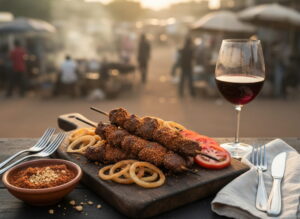
Ghanaian Chichinga
Accra’s Spicy Peanut-Beef Skewers from the Street Grill This recipe takes you on a culinary [...]
14
Aug
Aug
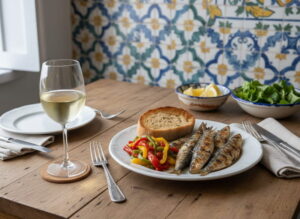
Portuguese Grilled Sardines with Bell Peppers
Lisbon’s Barbecue Party in June This recipe takes you on a culinary journey to Lisbon: [...]
07
Aug
Aug
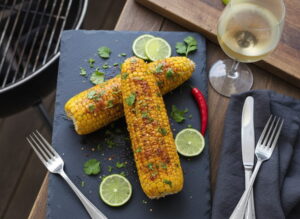
Grilled Corn on the Cob with Chili-Lime Butter
Classic street food, fresh off the grill Wine with a meal can elevate even the [...]
23
Jul
Jul
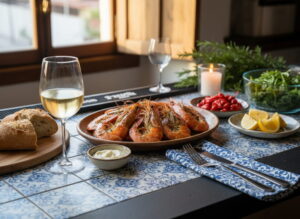
Grilled king prawns with aioli and baguette
Simple, Mediterranean, summery In this recipe, wine pairs with food in the most straightforward yet [...]
22
Jul
Jul
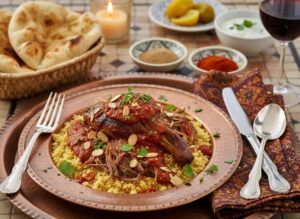
Cold-braised leg of lamb with couscous and harissa
Oriental roasted flavors and slow braising Wine really comes into its own with this dish, [...]
22
Jul
Jul
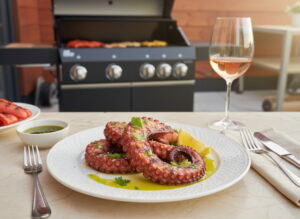
Grilled octopus with lemon-herb oil—when the sea meets the fire
Octopus on the Grill—An Encounter with the Sea There are two ways to prepare octopus: [...]
18
Jun
Jun

Mussels à la Sétoise
The mussel from Sète—and the wine that carries the saffron broth When it comes to [...]
16
Jun
Jun
Latest food pairings for wines from the Languedoc
Bacalhau à Brás – A Portuguese Classic with Salt Cod, Eggs, and Potatoes
Lisbon’s most popular bacalhau dish from the Bairro Alto This recipe takes you on a [...]
02
Sep
Sep
Cabbage Rolls with Ground Meat and Mashed Potatoes
The hearty Sunday classic from Grandma’s kitchen This recipe from “Wine with Dinner” pays tribute [...]
31
Aug
Aug
Quince Tart with Almond Streusel
The Rare Scent of Quince Season In this recipe, “Wine with Dinner” celebrates one of [...]
27
Aug
Aug
Ghanaian Chichinga
Accra’s Spicy Peanut-Beef Skewers from the Street Grill This recipe takes you on a culinary [...]
14
Aug
Aug
Portuguese Grilled Sardines with Bell Peppers
Lisbon’s Barbecue Party in June This recipe takes you on a culinary journey to Lisbon: [...]
07
Aug
Aug
Grilled Corn on the Cob with Chili-Lime Butter
Classic street food, fresh off the grill Wine with a meal can elevate even the [...]
23
Jul
Jul
Grilled king prawns with aioli and baguette
Simple, Mediterranean, summery In this recipe, wine pairs with food in the most straightforward yet [...]
22
Jul
Jul
Cold-braised leg of lamb with couscous and harissa
Oriental roasted flavors and slow braising Wine really comes into its own with this dish, [...]
22
Jul
Jul
Grilled octopus with lemon-herb oil—when the sea meets the fire
Octopus on the Grill—An Encounter with the Sea There are two ways to prepare octopus: [...]
18
Jun
Jun
Mussels à la Sétoise
The mussel from Sète—and the wine that carries the saffron broth When it comes to [...]
16
Jun
Jun

Tielle sétoise
The squid pie from Sète—and the wine that comes from the same lake When it [...]
16
Jun
Jun

Thau Oysters
The oyster of the South—and the wine grown on the same soil Pairing wine and [...]
16
Jun
Jun


Pastiera Napoletana
The cake that makes you silent – Naples’ greatest dessert and its rarest wine Wine [...]
03
Jun
Jun

Mosel plum tart with almonds & Beerenauslese
When fall comes in the oven – plums, marzipan and a rare wine Combining wine [...]
29
May
May

Chicken yassa with onions and lemon
West Africa on a plate – a dish that opens borders Wine with food is [...]
19
May
May
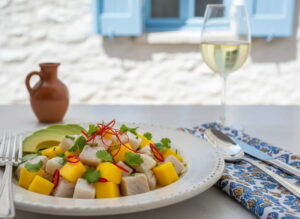
Ceviche of sea bass with mango and chili
Latin America meets the Mediterranean – acidity, spiciness and tropical freshness Ceviche is one of [...]
07
May
May

West African chicken yassa with onions and lemon
Senegalese cuisine meets wine culture – a West African classic rediscovered Yassa Poulet is one [...]
07
May
May

Tuscan panzanella with anchovies and capers
Tuscany on a plate – when stale bread becomes the starring role Panzanella is one [...]
07
May
May

Cold-braised leg of lamb with couscous and harissa
North Africa as a guest in summer – a stew that doesn’t shy away from [...]
06
May
May

Young carrots glazed with ginger honey and ricotta crostini
When vegetables take on the leading role – a vegetarian statement Finding the right wine [...]
22
Apr
Apr

Asparagus tagliatelle with white asparagus and truffle butter
Pasta meets spring – when two luxury products meet When you think of wine with [...]
15
Apr
Apr

White asparagus with lamb chop and mint yogurt sauce
Spring on a plate – when two seasons meet If you want to combine wine [...]
13
Apr
Apr

White asparagus with duck breast and orange jus
A liaison of contrasts – spring elegance meets fleshy depth Combining wine and food is [...]
12
Apr
Apr
