

Wine & food from the green end of Spain – granite, the Atlantic and the king of white wines
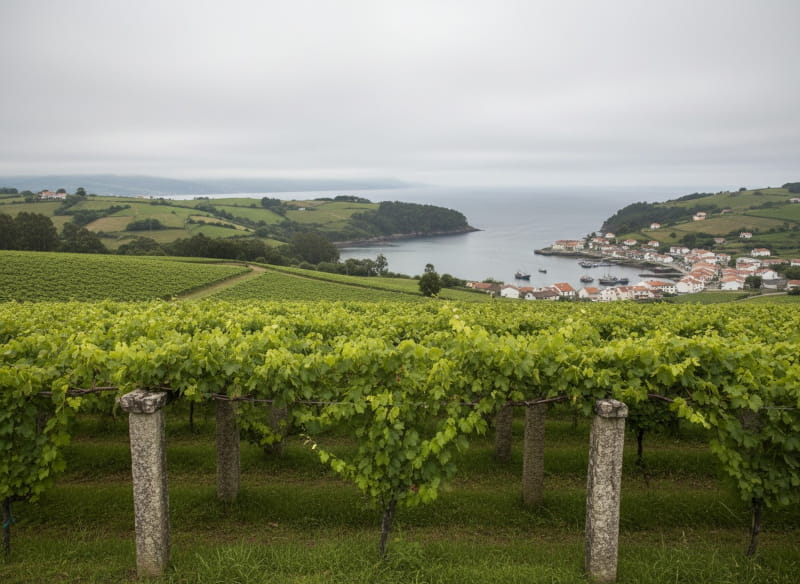
Galicia is not the Spain that the world knows. No flamenco, no bullfights, no arid plateaus. The far northwest of the Iberian Peninsula is a different world: green, damp, misty, covered in ancient forests and surrounded on three sides by the Atlantic Ocean. The rías – those deep inlets that cut deep into the land and structure the coast like a fingerprint – fill up twice a day with the coldest, most nutrient-rich water in the Atlantic. What lives in it is the best the sea has to offer: Scallops, mussels and cockles, barnacles, sea urchins, sardines, hake. Galicia eats what it catches – and drinks the wine that has grown on the same granite slopes.
Albariño is the wine of this coast. On the pergola-like parrales of granite pillars, barely a kilometer from the sea, it matures into one of the most characterful white wines in the world: highly aromatic, with a lively acidity, a salinity that no other wine produces so purely, and a citrus-peach freshness that transforms every bite of seafood into a moment of the Mediterranean. Pairing wine and food in Galicia is not an art or a theory – it means drinking the right thing with the right thing. And the right thing is almost always Albariño.
Wine culture in Rías Baixas & Galicia
Galicia is one of the oldest wine regions in Spain. The Celts were brewing fermented drinks here long before the Romans, and the Romans immediately recognized the potential of this humid, fertile coast for winegrowing. During the Arab occupation, viticulture in Galicia remained almost untouched due to the influence of the pilgrimage route to Santiago de Compostela – the Cistercian monks who ran monasteries along the Camino de Santiago tended the vines and brought the wine to the altar. The Camino de Santiago was for Galician wines what the bishop’s see was for the great Burgundy wines: a distribution channel and a mark of quality at the same time.
The Denominación de Origen Rías Baixas was recognized in 1988 and comprises five subzones: Val do Salnés – the original heartland, closest to the sea and with the most pronounced salinity – as well as O Rosal, Condado do Tea, Soutomaior and Ribeira do Ulla. Over 90 percent of the production is Albariño, and rightly so: the grape variety is so closely intertwined with this coast that it hardly reaches the same depth in any other wine-growing region in the world outside Galicia and neighboring northern Portugal. The Martin Codax, Pazo de Señorans, Fillaboa, Do Ferreiro and Palacio de Fefiñanes wineries have made Albariño what it is today: one of the most prestigious white wines in Europe.
In addition to Rías Baixas, Galicia has two other important wine regions, which are also covered on these pages: the Ribeira Sacra DO, the steep slate valley of the Río Sil with its Mencía red wine, and the Valdeorras DO, where the Godello – Galicia’s second great white wine – finds its best expressions.
Grape varieties & stylistics
- Albariño is the soul of Galicia. Its thick skin – an adaptation to the humid, fungus-prone Atlantic conditions – gives it a natural resistance to rot and produces wines of unusual complexity. In the glass: lemon, white peach, apricot, grapefruit, jasmine and a salinity that comes from the Atlantic winds that blow through the vineyards. Its acidity is high, its aromatics pronounced, its body medium-bodied – and in its best expression from the Val do Salnés, directly on the Atlantic coast, it carries a minerality from the granite soil that makes it unmistakable. As a Vendimia Tardía – late harvest, with increased residual sugar – the Albariño produces dessert wines with a honeyed, fruity depth that is exceptionally harmonious with Tarta de Santiago or cheese.
- Godello is Galicia’s second major white grape variety, at home in the Valdeorras DO on the Río Sil. It is fuller-bodied and less aromatically expressive than Albariño, but with a richness and depth reminiscent of a light Burgundy white wine. Pear, quince, herbs and a pronounced minerality from the slate soils of the Valdeorras – Godello is the white wine to choose when the dish has more substance than a fresh fish: empanada gallega, hearty stews, hearty grilled fish. Still little known as a wine region, as a wine it is one of the most exciting discoveries of the last decade.
- Mencía is Galicia’s red wine, mainly at home in the Ribeira Sacra DO and in neighboring Bierzo (Castile and León). On the extreme slate terraces above the Río Sil – some of the steepest and most difficult to cultivate vineyards in Europe – it produces red wines with an elegance and coolness that you would not expect from a Spanish red wine: dark cherry, slate, violets, a fine tannin and a freshness that is due to the extreme climatic conditions of these river terraces. With the rich, meaty and herbaceous dishes of Galician cuisine – caldo gallego, lacón con grelos – Mencía is the most harmonious red wine that Galicia has to offer.
- Treixadura is the main grape variety of the Ribeiro DO, the third largest Galician wine region, close to the border with Portugal. It produces aromatic, light-bodied white wines with floral notes and a fine freshness, which, when blended with Godello and Loureiro in the Ribeiro white wine blend, make an elegant everyday companion for Galician cuisine.
Galician cuisine
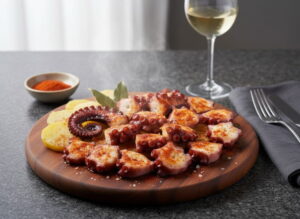
Galicia is the seafood capital of Europe. The Rías bays provide seafood of a quality that supplies even the most demanding markets in Barcelona and Madrid: Scallops (Vieiras), which have become the symbol of the Camino de Santiago; mussels (Mejillones), which are farmed in huge quantities on rafts in the Rías; barnacles (Percebes), which are collected on the most dangerous rocks of the Costa da Morte and are among the most expensive seafood in Spain; and Galician octopus (pulpo), which is cooked until soft in the heat of the copper cauldron and served on a wooden board with paprika and coarse sea salt – as pulpo a feira – to become the Galician national dish.
In addition to seafood cuisine, Galicia has a down-to-earth domestic cuisine of stews, stews and pastries: caldo gallego with kale, potatoes and chorizo; lacón con grelos – salted pork shoulder with turnip greens, chorizo and potatoes; empanada gallega, a stuffed pastry with tuna or meat, the Galician version of pies. And at the end of the evening, the tarta de Santiago – an almond tart so simple that it needs no explanation, and so good that it requires no other ingredients.
Typical dishes:
- Pulpo a Feira – Galician octopus cooked on a wooden board with pimentón (smoked paprika), coarse sea salt and olive oil: the most iconic dish in Galicia and one of the simplest dishes in the world
- Vieiras a la gallega – scallops in their shells, baked with a sofrito of onions, tomatoes, peppers and white wine: the Galician pilgrimage dish
- Merluza a la gallega – Galician hake with potatoes, pimentón oil and garlic: the most harmonious combination of Atlantic fish and Galician culinary tradition
- Empanada gallega – stuffed pastry shell with tuna or meat filling, baked in olive oil: the Galician all-rounder that tastes equally good hot or cold
- Mejillones en escabeche – mussels in a vinegar and paprika marinade: salty, spicy, intense and a Galician cult product when canned
- Pimientos de Padrón – small green peppers from the town of Padrón, fried in olive oil, with coarse sea salt – of which one in ten is hot, and the rest are not: the gamble at the table
- Percebes – barnacles, briefly cooked in salted water, served as fresh as possible: Seafood in its purest form, without any ingredients other than seawater and heat
- Caldo gallego – the Galician winter pot: white beans, kale, potatoes, chorizo and lacón in a hearty broth
- Lacón con grelos – salted pork shoulder with turnip greens, chorizo and potatoes, steamed and braised: the Galician festive dish
- Tarta de Santiago – the Galician almond tart with the cross of St. James made of powdered sugar: simple, nutty, sweet and the most worthy end to a Galician meal
Wine & Food from Galicia
The guiding principle of Galician cuisine is the sea – and Albariño is a born sea wine. Its salinity communicates on a frequency with the iodine of the seafood, its acidity cuts through the fat of the olive oil and keeps the palate alive after every bite, and its fruit provides an aromatic contrast to the reduced spice of the pimentón. For the heavier dishes – empanada, caldo gallego, lacón – the Godello from the Valdeorras DO takes the lead in the white wine, and the Mencía from the Ribeira Sacra, as an elegant red wine, brings exactly the freshness that Galician stews need without overwhelming them.
Top 10 recipes with wine recommendations from Galicia – enjoyment & food pairing from Rías Baixas and Co.
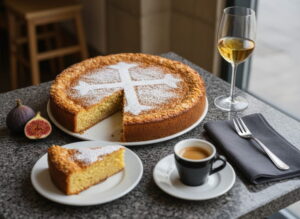
Santiago Cake
The Apostle’s Cake—and the Wine That Was Waiting for Him Pairing wine with food raises [...]
12
Jun
Jun
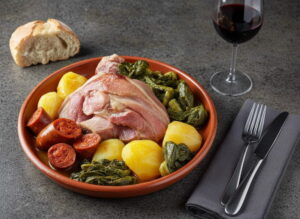
Lacón con grelos
The dish of the Galician entroido – and the red wine that carries the feast [...]
10
Jun
Jun
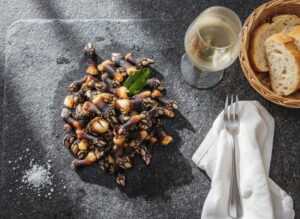
Percebes al natural
The most expensive sea creature in Galicia – and the wine that doesn’t need it [...]
10
Jun
Jun
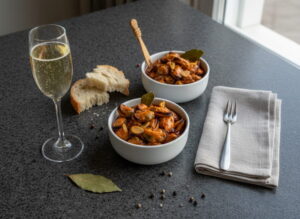
Mejillones en escabeche
The mussel that only becomes Galician in the marinade – and the wine that loves [...]
10
Jun
Jun
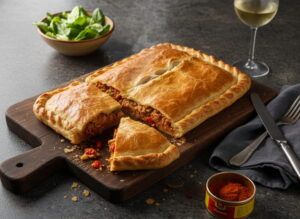
Empanada gallega de atún
The Galician pastry coat – and the wine that hardly anyone knows, but everyone should [...]
10
Jun
Jun
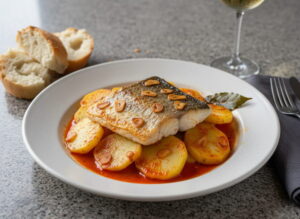
Merluza a la gallega
The hake from the rías – and the refrito that demands a wine that can [...]
08
Jun
Jun

Vieiras a la gallega
The scallop as a pilgrim’s dish – and the wine that went the same way [...]
08
Jun
Jun
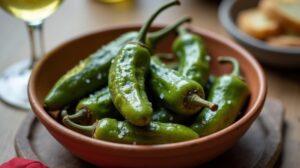
Pimientos de Padrón with sea salt
Spanish tapas classics: simple, quick and full of flavour Pimientos de Padrón are small green [...]
28
May
May
Latest food recommendations with wines from Galicia
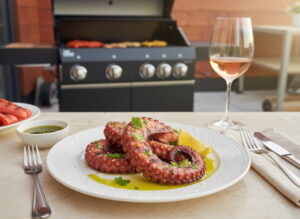
Grilled octopus with lemon-herb oil—when the sea meets the fire
Octopus on the Grill—An Encounter with the Sea There are two ways to prepare octopus: [...]
18
Jun
Jun

Thau Oysters
The oyster of the South—and the wine grown on the same soil Pairing wine and [...]
16
Jun
Jun
Santiago Cake
The Apostle’s Cake—and the Wine That Was Waiting for Him Pairing wine with food raises [...]
12
Jun
Jun
Percebes al natural
The most expensive sea creature in Galicia – and the wine that doesn’t need it [...]
10
Jun
Jun
Mejillones en escabeche
The mussel that only becomes Galician in the marinade – and the wine that loves [...]
10
Jun
Jun
Empanada gallega de atún
The Galician pastry coat – and the wine that hardly anyone knows, but everyone should [...]
10
Jun
Jun
Merluza a la gallega
The hake from the rías – and the refrito that demands a wine that can [...]
08
Jun
Jun
Vieiras a la gallega
The scallop as a pilgrim’s dish – and the wine that went the same way [...]
08
Jun
Jun

Sarde a beccafico
The Sicilian paradox on a plate – sweet, salty, oily and unforgettable Combining wine and [...]
05
Jun
Jun

Impepata di cozze
Ten minutes, one pot, the sea – the fastest dish in Naples Combining wine and [...]
02
Jun
Jun
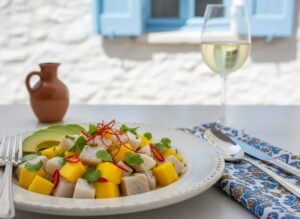
Ceviche of sea bass with mango and chili
Latin America meets the Mediterranean – acidity, spiciness and tropical freshness Ceviche is one of [...]
07
May
May
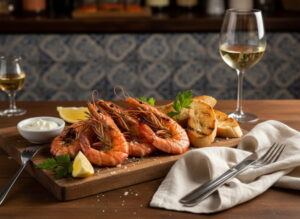
Grilled king prawns with aioli and baguette
Iberia on the grill – when garlic and the sea meet If you are looking [...]
06
May
May
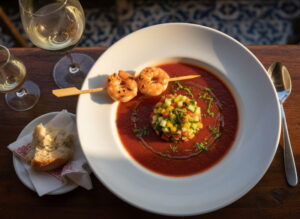
Gazpacho Andaluz classic with prawn skewer
Summer in a bowl – Andalusia on the table Finding the right wine pairing for [...]
05
May
May
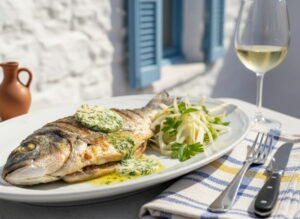
Grilled sea bream with herb butter and fennel salad
Summer from the grill – when Mediterranean fish is at its best Wine with food [...]
05
May
May

Homemade spring rolls with rice noodles and prawns
Crispy, fresh, homemade – spring rolls you won’t forget People who associate wine with Asian [...]
24
Apr
Apr

Radish salad with scallops and wasabi vinaigrette
Spring with a Japanese twist – spicy, fresh, irresistible Finding the right wine pairing for [...]
23
Apr
Apr
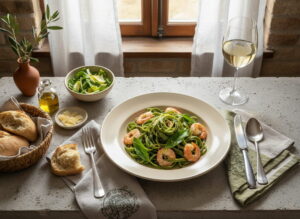
Wild garlic pasta with prawns and lemon butter
When the forest meets the sea – a spring classic with character Finding the right [...]
23
Apr
Apr

Cold pea and mint soup with salmon trout tartare
Cool elegance – the first day of summer in the glass and on the plate [...]
21
Apr
Apr
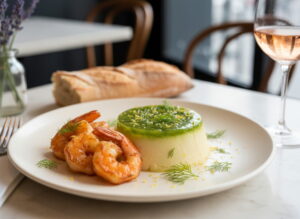
Asparagus panna cotta savory with asparagus jelly and shrimp
When patisserie moves into the kitchen – technology meets the season If you think wine [...]
18
Apr
Apr
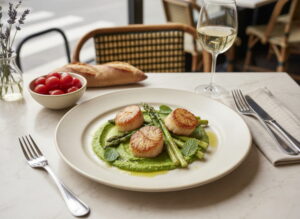
Green asparagus with scallops and pea puree
Spring from the sea – a combination with depth Finding the right wine pairing for [...]
17
Apr
Apr
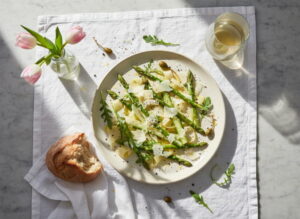
Asparagus carpaccio raw with parmesan and lemon oil
Raw, simple, radically good – asparagus in its purest form If you want to combine [...]
17
Apr
Apr
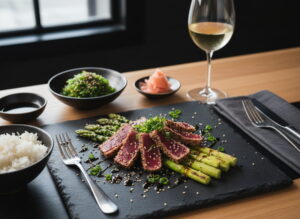
Green asparagus with tuna tataki and sesame dressing
When Asia meets spring – a dish with cosmopolitan flair Finding the right wine to [...]
15
Apr
Apr

Cold asparagus soup with wasabi cream and trout caviar
Cool elegance – when white asparagus meets Japanese accents Rethinking wine with food sometimes means [...]
10
Apr
Apr
