

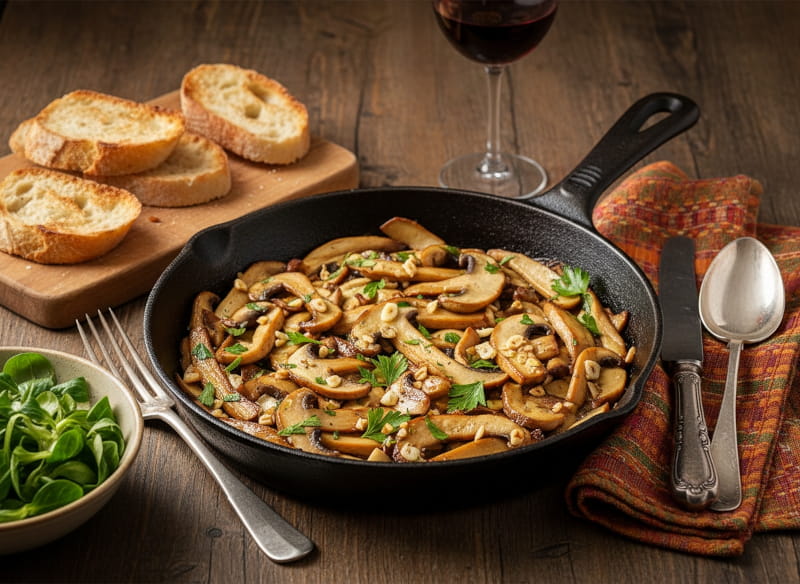
The autumnal essence of the forests of the southwest for discerning connoisseurs
If you are looking for the perfect wine to accompany a dish that celebrates the earthy depths of the forest, cèpes à la Bordelaise are an exquisite choice. The wine and food theme here is defined by the mineral and mushroomy flavors that are enhanced in the classic Bordelaise preparation with plenty of garlic, shallots and fresh parsley. When roasted, the porcini mushrooms develop a meaty texture and a nutty aroma, which is given an enormous presence on the palate by the spicy components of the herb mixture. This specialty from the Bordeaux hinterland calls for an accompaniment that can parry the power of the garlic and at the same time underline the fine forest aromas of the mushrooms. It is a culinary experience that combines down-to-earth tradition with purist elegance, bridging the gap between the cool dampness of mushroom season and the structured complexity of great wines, the aromatic harmony creating an incomparable depth that is particularly effective in the cooler months of the year.
Ideal wine pairing: Saint-Estèphe AOC (Bordeaux, France)
A Saint-Estèphe AOC is the ideal answer to cèpes à la Bordelaise (porcini mushrooms with garlic, shallots and parsley). These wines from the left bank of the Garonne are famous for their distinctive structure and their earthy, almost mineral notes, which harmonize perfectly with the taste of porcini mushrooms. On the nose, the wine often develops aromas of dark wild berries, undergrowth and graphite, which correspond wonderfully with the nutty depth of the mushrooms. As the preparation has a certain spiciness due to the garlic and shallots, the firm tannin structure of a Saint-Estèphe is needed to create a stable counterbalance on the palate. The cool clay soils of this northernmost appellation of the Haut-Médoc give the wine a natural freshness that perfectly balances the oily mouthfeel of the mushrooms fried in butter or fat. It is a regional pairing in which the power of the terroir and the aromatic intensity of the forest fruits merge into a majestic whole. The long-lasting, slightly tart finish of the wine ensures that the fine umami notes of the cèpes and the noble structure of Bordeaux caress the palate in a complex finale.
Further wine recommendations for this dish
Pomerol AOC (Bordeaux, France)
A Pomerol AOC offers a particularly melting and velvety accompaniment to Bordelais-style porcini mushrooms. This prestigious appellation from the Right Bank is known for its Merlot dominance, which brings out aromas of black cherries, truffles and chocolate. These truffly nuances in the wine echo the earthy components of the cèpes and enhance the luxurious mouthfeel of the dish. The soft tannins of the Pomerol flatter the meaty texture of the porcini mushrooms, while the full body of the wine stands up to the intensity of the garlic and parsley. It is an excellent choice for connoisseurs who prefer a harmonious and rounded combination, where the sweetness of the Merlot frames the savory mushroom flavors in a very elegant way and provides an opulent taste experience.
Pfalz Pinot Noir QbA (Pfalz, Germany)
A high-quality Pinot Noir from the Palatinate, ideally matured in barriques, offers a delicate and elegant German answer to wild mushrooms. The wine impresses with clear redcurrant and ripe raspberry fruit, paired with a fine smoky note and earthy accents that are typical of Pinot Noir. These earthy accents correspond perfectly with the aroma of porcini mushrooms. The lively acidity of Pinot Noir has an invigorating effect and breaks up the richness of the butter or oil in the dish. The wine’s fine tannins in particular support the mushrooms without dominating them. It is a very precise wine accompaniment that emphasizes the naturalness of the ingredients and convinces with a mineral clarity in the finish, which makes the dish appear wonderfully light and animating.
Rioja DOCa Reserva (Rioja, Spain)
A Rioja DOCa Reserva brings the maturity and spicy depth of Spain to the pairing and offers an exciting contrast to the French mushroom pan. Due to the long ageing in oak barrels, the wine develops aromas of leather, tobacco and vanilla, which harmonize phenomenally with the roasted aromas of the spicy sautéed porcini mushrooms. The already melted tannins of the Reserva ensure a very harmonious mouthfeel, while the natural acidity of the Tempranillo supports the freshness of the parsley. The wine’s characteristic spiciness also picks up on the shallot notes and embeds them in a warm flavor profile. This combination stands for depth and character and creates a bridge between autumnal forest cuisine and classic Spanish cellar art, which impresses with a long, spicy finish.
Baden Pinot Gris QbA (Baden, Germany)
A powerful Pinot Gris from Baden, aged in wooden barrels, is an excellent white alternative for those who do not prefer red wine. The wine is characterized by its yellow-fruity aroma, notes of roasted nuts and a strong body, which goes wonderfully with the nutty side of cèpes. As Pinot Gris often has a rather moderate acidity, it blends harmoniously with the soft texture of the porcini mushrooms. The subtle woody spice in the wine is an excellent match for the garlic and shallots. It is a very down-to-earth and honest wine recommendation that shows that a structured white wine with sufficient extract can be absolutely on a par with the intense forest aromas and provide a full-bodied, rounded experience on the palate.
Gevrey-Chambertin AOC (Burgundy, France)
A Gevrey-Chambertin AOC is the epitome of a Pinot Noir full of character from the cool north of the Côte de Nuits and a classic partner for mushroom dishes. The wine is known for its masculine structure and aromas that are often reminiscent of forest floor, game and dark fruit. This gamey aroma forms a perfect aromatic bridge to the freshly picked porcini mushrooms. The fine-grained tannins and precise acidity of the wine lend the combination an aristocratic elegance. The mineral tension in the wine in particular ensures that the garlic spice does not take over, but becomes part of a complex whole. A sophisticated choice for gourmets who want to celebrate the autumnal melancholy of the forest in the glass and on the plate in equal measure and value an extremely long aromatic finish.
The recipe:
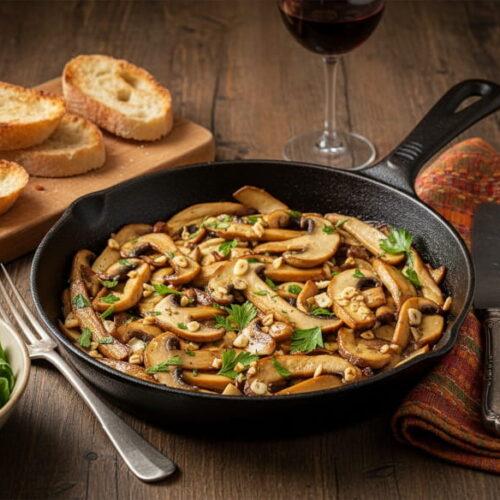
Cèpes à la Bordelaise (porcini mushrooms with garlic, shallots and parsley)
Cooking utensils
- 1 Large cast iron pan
- 1 Cutting board
- 1 Sharp knife
- 1 Kitchen paper
- 1 spatula
Ingredients
- 500 g fresh porcini mushrooms
- 2 large shallots
- 3 Garlic cloves
- 1 bunch of flat-leaf parsley
- 30 g Butter
- 2 Tbsp neutral vegetable oil
- Salt
- Black pepper from the grinder
- A dash of lemon juice
Preparation
PREPARATION:
- Carefully clean the porcini mushrooms with a brush or kitchen paper.
- Slightly trim the lower part of the stems if necessary.
- Cut the mushrooms into slices approx. 5 mm thick.
- Finely dice the shallots.
- Finely chop the garlic or cut into wafer-thin slices.
- Wash the parsley, shake dry and chop finely.
COOKING STEPS:
- Heat the oil in a large frying pan.
- Sauté the mushrooms in batches.
- The mushrooms should take on color without absorbing water.
- As soon as the mushrooms are golden brown, reduce the heat slightly.
- Add the butter to the pan and allow to foam up.
- Add the shallots and garlic.
- Continue frying for approx. 2 minutes while tossing.
- Shallots and garlic must not burn.
- Season generously with salt and black pepper.
- Stir in the chopped parsley.
DIRECTIONS:
- Remove the pan from the heat.
- Add a tiny squeeze of lemon juice over the mushrooms.
- Mix everything again briefly.
- Serve the cèpes on preheated plates.
- Sprinkle with a little fresh parsley to taste.
- Serve hot immediately.
- Toasted white bread is an excellent accompaniment.
SUPPLEMENTS:
- Toasted baguette or farmer’s bread
- A simple lamb’s lettuce
- Flash-fried entrecôte

