

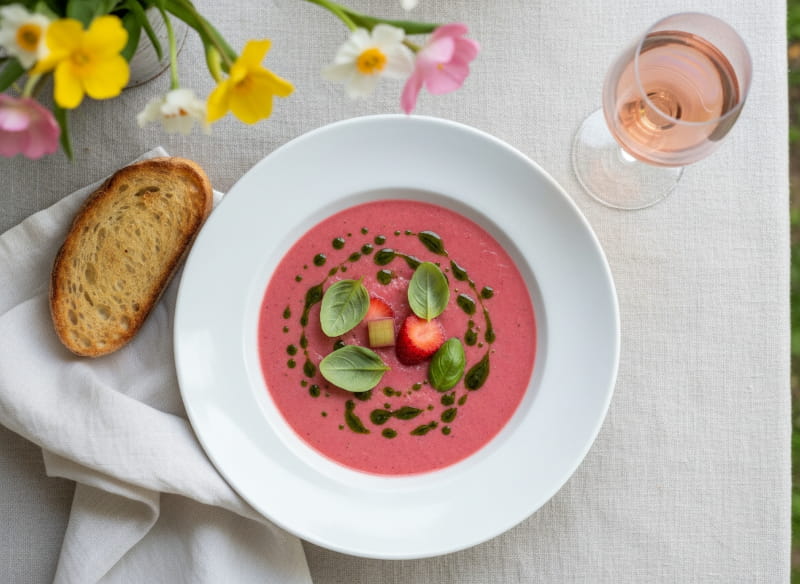
Pink, fresh, surprising – a gazpacho that reinvents spring
Finding the right wine to accompany a gazpacho that contains neither tomato nor cucumber, but is instead based on rhubarb and strawberries, is one of the most appealing tasks of modern spring cuisine. Combining wine and food here means finding a wine that blends harmoniously with the pronounced fruit acidity of the rhubarb, the natural sweetness of the ripe strawberry and the fresh, aniseed-like basil oil. A rhubarb gazpacho is not a dessert – it is a hearty, cool starter in which the fruitiness of the rhubarb is transformed into a complete taste sensation with salt, pepper, olive oil and a hint of chilli. The basil oil on top adds a Mediterranean herbal aroma and a depth that lifts the dish from fruity to aromatic. This gazpacho is spring in its most concentrated form – pink, cool, vibrant. And a rosé from Provence is its natural companion.
Ideal wine pairing: Rosé de Provence AOC (Provence, France)
From the limestone and slate soils of Provence, where Grenache, Cinsault and Mourvèdre blend into a wine of pale salmon pink and delicate aromas, comes a rosé wine that is as commonplace on the table in its homeland as olive oil. Its aromas of fresh strawberry, white peach, citrus blossom and a hint of Provençal herbs – thyme, rosemary, lavender – hit the rhubarb and strawberry gazpacho on several levels at once. The strawberry note of the rosé directly reflects the strawberry in the dish without becoming redundant: The two together intensify the fruity sweetness without making it seem overbearing. The herbal notes communicate with the basil oil on a fine, aromatically harmonious level. Its elegant dryness and lively acidity cut through the fruit acidity of the rhubarb and create freshness and balance. It should be served chilled (8-10 °C), making it an ideal accompaniment to cold gazpacho – both fresh, both light, both bright pink.
Further wine recommendations for this dish
Crémant d’Alsace AOC Brut (Alsace, France)
From Alsace, where Pinot Blanc, Auxerrois and Chardonnay merge to create an elegant sparkling wine with a fine perlage and fresh aroma, comes an alternative to rosé that opens up the gazpacho in an invigorating way with its perlage. Its aromas of green apple, citrus and a hint of brioche carry the fruit acidity of the rhubarb and create lightness. The perlage cleanses the palate after every spoonful and enhances the experience of the cool gazpacho. For all those who prefer a sparkling wine to a still wine for their spring gazpacho.
Sancerre AOC rosé (Loire, France)
The Sancerre Rosé from Pinot Noir grown on limestone soils brings a freshness and minerality that goes beyond what most rosé wines offer. Its strawberry-raspberry aromatics hit the gazpacho head-on, its taut Loire acidity cutting through the fruit acidity of the rhubarb with precision. It is more mineral and cooler than the Provence rosé, which makes it an exciting, more elegant alternative. For anyone who prefers Loire elegance to Provençal warmth for a spring gazpacho evening.
Pfalz Gewürztraminer QbA dry (Pfalz, Germany)
The rose petal and lychee aromas of the Pfalz Gewürztraminer QbA trocken meet the strawberry and basil oil on a surprisingly direct, floral and aromatic level. It is more expressive than the rosé – almost perfumed in its aromatic intensity – but its dryness and well-integrated acidity prevent it from overpowering the dish. For anyone looking for a more expressive, aromatically intense wine to accompany rhubarb gazpacho than the quiet Provence rosé.
Txakoli DO Getariako Txakolina (Basque Country, Spain)
Lightly sparkling, fresh and salty, provocatively light and low in alcohol: Txakoli from the Basque coastal region is a fascinating, unconventional accompaniment to cold, fruity and acidic dishes. Its perlage enlivens the gazpacho and opens up its fruit acidity in a crisp manner. Its brevity on the finish allows the rhubarb, strawberry and basil oil to take center stage. A wine for all those who consciously choose the lightest and freshest for a gazpacho evening.
You can find more light spring recipes with matching wines on the spring and wine overview page.
The recipe:
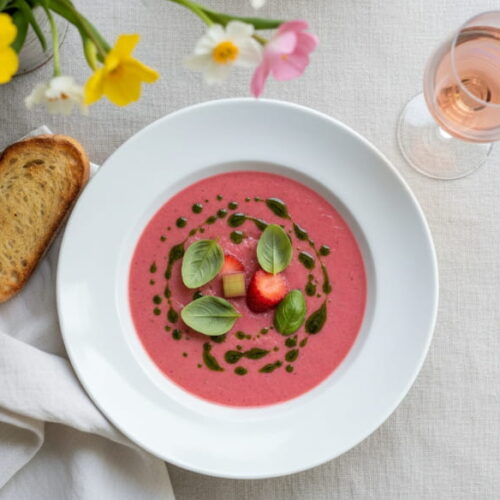
Cold rhubarb gazpacho with strawberry and basil oil
Cooking utensils
- Small saucepan (briefly steam the rhubarb)
- Stand mixer or hand blender
- Fine sieve
- Tiefe Suppenteller oder Schalen (vorher kühlen)
- Small bowl (for the basil oil)
Ingredients
- 400 g Rhubarb cut into pieces
- 200 g ripe strawberries de-stemmed
- 2 1 tbsp olive oil
- 1 Tbsp white balsamic vinegar
- 1 tsp sugar
- 1 Pinch of chili or cayenne pepper
- Salt white pepper
- 100 ml Cold water
FOR THE BASIL OIL:
- 1 bunch of fresh basil
- 80 ml Extra virgin olive oil
- 1 Pinch of salt
Preparation
PREPARATION:
- For the basil oil: Blanch the basil in boiling salted water for 30 seconds and immediately rinse in ice water.
- Squeeze well, puree finely with olive oil and salt in a blender, pour through a fine sieve. Set aside.
- Steam the rhubarb in a small pan with the sugar and 2 tablespoons of water for 5 minutes until soft.
- Leave to cool.
COOKING STEPS:
- Puree the rhubarb, strawberries, olive oil, balsamic vinegar, water, chili, salt and pepper in a blender until very smooth.
- Pass through a fine sieve for a particularly velvety texture.
- Season to taste – the gazpacho should taste fruity, sour and slightly salty, not sweet.
- Chill for at least 1 hour.
DIRECTIONS:
- Serve the gazpacho in chilled deep plates or bowls.
- Spread drops of basil oil on the surface.
- Garnish with a halved strawberry, a piece of rhubarb and fresh basil leaves.
- Serve immediately.
SUPPLEMENTS:
- Toasted sourdough bread with olive oil
- Goat’s cream cheese gnocchi as an optional topping
- Fresh rocket leaves as garnish

