

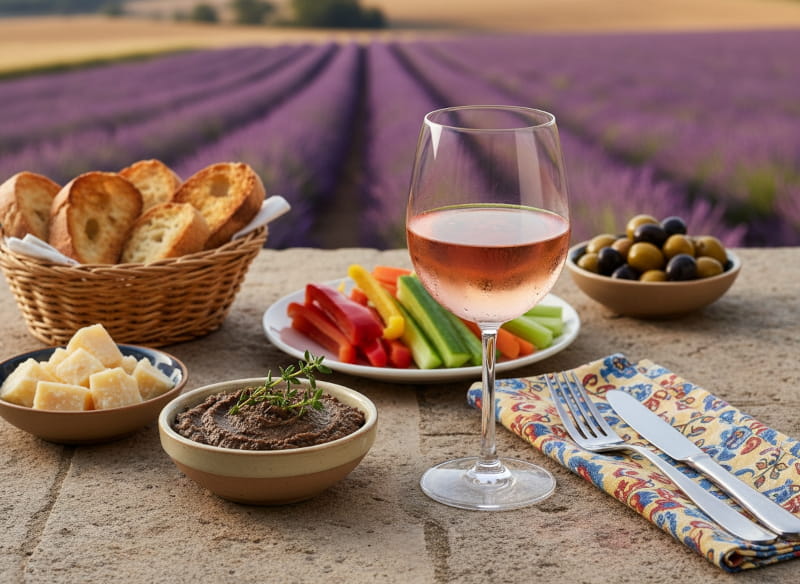
The spicy ambassador of Provence for the aperitif
Choosing the right wine to accompany a meal often begins with the first small delicacies of the evening. Anyone who is intensively involved with wine and food will not be able to avoid the classic tapenade, which is considered the epitome of the Provençal way of life. This intense paste of black olives, salty capers and spicy anchovies is a powerhouse of umami and Mediterranean flavors. It calls for a partner in the glass to absorb this saltiness and at the same time provide an invigorating freshness. The texture and quality of the olives used in a homemade tapenade sets it apart from industrial products and lays the foundation for a successful culinary start. Whether on a crispy baguette or as an accompaniment to fresh vegetables, this paste is versatile and brings the sun of southern France directly to the table. In gastronomy, it is particularly appreciated for its ability to awaken the palate and prepare it for the courses to come, whereby the balance between the salty and oily components is crucial.
Ideal wine pairing: Côtes de Provence Rosé AOC (Provence, France)
A classic rosé from Provence is the natural and logical choice for a tapenade, as both come from the same terroir and speak the same aromatic language. The wine, usually a cuvée of Grenache, Cinsault and Syrah, impresses with its salmon-colored elegance and a fine fruit of red berries and citrus notes. This freshness is essential to balance the intense saltiness of the olives and anchovies and to refresh the palate after every bite. The subtle herbal spiciness of the wine, often described as a garrigue note, is reflected in the tapenade and creates a harmonious combination on a sensory level. A high-quality Côtes de Provence also has a fine mineral vein that corresponds wonderfully with the maritime notes of the anchovies. It offers enough structure to stand up to the olive oil without masking the subtle nuances of the capers. It is an interplay that is characterized by lightness and summery joie de vivre and puts the rustic power of the paste in an elegant light.
Further wine recommendations for this dish
DO Manzanilla-Sanlúcar de Barrameda (Andalusia, Spain)
This dry sherry is an absolute insider tip for salty starters such as tapenade, as its floral and saline characteristics are an excellent match. The wine develops notes of chamomile and almonds due to its ageing under a layer of yeast, which underline the nutty aroma of the black olives. The extreme dryness and present acidity act almost like a cleanser for the palate when the rich olive oil of the paste is in play. As the tapenade is very spicy due to the capers and anchovies, it needs a partner that shines not through primary fruit, but through structure and minerality. The Manzanilla offers precisely this maritime freshness, reminiscent of a sea breeze, and takes the salty components of the dish to a new level. It is a bold combination that will delight connoisseurs with its precision and ability to emphasize the savoury umami notes.
Etna Bianco DOC (Sicily, Italy)
A white wine from the volcanic slopes of Mount Etna, made primarily from the Carricante grape variety, brings with it a fascinating smoky minerality. This mineral depth is an excellent counterpart to the earthy heaviness of the black olives and the pungency of the garlic in the tapenade. With aromas of yellow fruits, wild herbs and a vibrant acidity, the wine offers a vital structure that lightens up the dish. The volcanic origin gives the wine a salty component on the finish, which blends seamlessly with the capers and anchovies. It is very focused and clear on the palate, which creates an exciting contrast to the rather oily and dense texture of the olive paste. This pairing shows how well wines from Mediterranean islands can harmonize with the classic mainland cuisine of southern France, emphasizing the shared roots of sea and sun and creating a complex flavor profile.
Riesling Pfalz QbA (Pfalz, Germany)
A dry Riesling from the Palatinate offers a fruity contrast to the spicy tapenade with its lively acidity and pronounced fruit of ripe peach and apricot. The acidity of Riesling is a classic tool for breaking through fat structures, such as those found in olive oil, and providing freshness. The mineral notes in particular, which Palatinate wines often draw from red sandstone or limestone soils, harmonize well with the saltiness of the olives. While the tapenade tastes rather dark and spicy, the Riesling brings light and yellow fruit flavors to the pairing, which makes for an exciting flavor dynamic. It is a combination that comes to life above all through the interplay between the sweetness and acidity structure and the tart spiciness of the olive paste. This wine proves that German white wines can be an excellent alternative to the classic wines of the south when it comes to accompanying intense Mediterranean flavors with elegance and drinking flow.
Assyrtiko Santorini PDO (Cyclades, Greece)
The Assyrtiko from the island of Santorini is famous for its steely acidity and enormous concentrationPfalz , which makes it an equal partner for the strong tapenade. The island’s volcanic soils give the wine an unmistakable note of flint and sea salt, which corresponds perfectly with the anchovies and capers in the recipe. Citrus peel and white flowers can be found on the nose, forming a beautiful aromatic complement to the herbal spice of the Provence paste. The wine has an almost viscous texture, which makes it powerful enough not to be drowned out by the intense olives. This pairing is characterized by archaic power and freshness, reminiscent of a meal right on the coast. The salty length of the wine in the finish prolongs the taste of the tapenade and ensures a long-lasting, maritime experience that celebrates the intensity of both components.
Vinho Verde DOC (Minho, Portugal)
A sparkling Vinho Verde, ideally from the Alvarinho grape variety, brings a carefree lightness to the combination with tapenade. With its subtle carbon dioxide and fresh aromas of green apple and lime, it acts as an invigorating elixir to the rather heavy, oily paste. The lightness of the wine ensures that the tapenade does not appear too powerful and the palate always remains active. This is an excellent choice as an aperitif pairing in particular, as the lower alcohol content of the wine stimulates the appetite rather than saturating it. The subtle fruity sweetness that often resonates in the background perfectly balances the bitter note of black olives. It is an uncomplicated yet sophisticated pairing based on contrasts and shows that freshness is the best companion for intense Mediterranean spice. The youthful energy of the wine provides a wonderful framework for the traditional Provence recipe.
The recipe:

Tapenade (olive, caper and anchovy paste)
Cooking utensils
- 1 Mortar or small blender
- 1 Cutting board
- 1 Knife
Ingredients
The basis
- 200 g Black olives pitted, preferably Niçoise or Kalamata
- 2 Tbsp capers rinsed
- 4 Anchovy fillets in oil drained
The seasoning
- 1 Garlic clove finely chopped
- 4 Tbsp extra virgin olive oil
- 1 teaspoon fresh thyme finely chopped
- 1 squeeze of lemon juice
- Freshly ground black pepper
Preparation
Preparation
- Stone the olives (if necessary) and chop roughly. Rinse the capers under running water to remove any excess salt and roughly chop them too. Finely chop the anchovy fillets.
Mixing
- Place all the solid ingredients (olives, capers, anchovies, garlic, thyme) in a mortar and grind into a coarse paste.
- Alternatively, you can use a small blender, but only pulse briefly so that the mixture does not become too mushy – a certain texture should be retained.
Season to taste
- Slowly stir in the olive oil until the desired consistency is reached. Season to taste with a squeeze of lemon juice and freshly ground pepper.
- Salt is usually not necessary, as olives, capers and anchovies already provide enough saltiness. Leave to stand for approx. 30 minutes before serving.
Recommended sides:
- Crispy baguette slices (freshly toasted)
- Fresh vegetable sticks (peppers, cucumber, celery)
- Hard cheese cubes (e.g. old Manchego or Parmesan)

