


A sweet masterpiece from the UNESCO World Heritage region
Wachau apricot dumplings are an absolute highlight when it comes to the perfect wine to go with food in the area of sophisticated dessert cuisine. The art of harmoniously combining wine and food is demonstrated here in the fine balance between the fruity acidity of the apricot and the softness of the dough. This specialty from the Austrian gourmet region impresses with its fluffy curd cheese pastry, which encloses a whole, juicy fruit. In the middle of the apricot, a piece of sugar cube often replaces the stone, which melts into a sweet syrup when cooked. The breadcrumbs, toasted in plenty of butter until golden brown, give the dish a nutty component and a pleasant crunch. It is a dish that awakens deep feelings of home and at the same time requires the utmost precision in preparation. Choosing the right accompaniment is crucial in order to enhance the fruity nuances without overwhelming the delicate structure of the curd cheese or completely overpowering it with too much residual sugar in the wine.
Ideal wine accompaniment: Riesling Federspiel Wachau DAC (Wachau, Austria)
The choice of a Riesling Federspiel from the Wachau is the logical and at the same time most brilliant complement to this dish, as the origin of the fruit and wine is identical. The cool minerality of the primary rock on which the vines grow is reflected in the freshness of the apricot. A Federspiel has the necessary race and a delicate acidity that cuts the fat of the butter crumbs perfectly and refreshes the palate for the next bite. Aromas of white peach and a hint of lime in the wine correspond wonderfully with the stone fruit character of the dumplings. As a Federspiel is usually vinified dry or with only minimal residual sweetness, this creates an exciting interplay between the sweetness of the dumplings and the animating nature of the wine. This prevents the dessert from being too powerful and instead emphasizes the elegant fruitiness. It is a pairing that impresses with regional authenticity and flavor precision and shows how wine can masterfully underline the fine acidity of a fruit dessert.
Further wine recommendations for this dish
Gelber Muskateller Südsteiermark DAC (Styria, Austria)
This wine is known for its intense aroma, reminiscent of elderflower and fresh grapes, which goes perfectly with the floral scent of ripe apricots. The lively acidity of the Styrian wines ensures a wonderful lightness on the palate, which perfectly balances the rich curd dough of the dumplings. The spicy nuances of the muscatel in particular harmonize with the butter-roasted breadcrumbs and give the combination additional depth. It is a refreshing accompaniment that makes the dessert seem less heavy and instead brings the fruity components to the fore. Due to its mostly moderate alcohol content, the combination remains lively and elegant, making this wine an excellent alternative for anyone looking for a bouquet-driven and lively taste experience that appeals to the senses from the first sniff of the glass and heightens the anticipation of the first bite of the sweet apricot dumplings.
Sauternes AOC (Bordeaux, France)
Those who prefer a classic sweet wine will find an opulent partner in Sauternes, whose aromas of dried apricots and honey form an almost symbiotic relationship with Wachau apricots. The noble sweetness of the wine, characterized by botrytis, offers a powerful counterpoint to the acidity of the fruit and the salty accent of the butter crumbs. Despite the high sweetness, a good Sauternes has a supporting acid structure that prevents the combination from being sticky. The creamy texture of the wine caresses the soft curd cheese and creates a luxurious mouthfeel that lingers for a long time. This pairing is ideal for lovers of classic dessert wines looking for an intense and harmonious fusion of fruit and wine. The complexity of the Sauternes also brings subtle vanilla notes that harmonize beautifully with the sugar and cinnamon of the crumb mixture, giving the whole dish an aristocratic note that makes it a festive end to a meal.
Moscato d’Asti DOCG (Piedmont, Italy) This slightly sparkling wine from Italy has a playful lightness that goes perfectly with a summery dessert. The fine carbonic acid and low alcohol content make it a very digestible choice that lightens up the dish. The typical aromas of orange blossom and sage complement the apricot fruit in a subtle, herbal way that adds a new dimension to the dish. The natural residual sweetness of the Moscato absorbs the sweetness of the dumplings without drowning them out. It is a light-hearted combination that is particularly enjoyable on warm evenings and impresses with its effervescence. The fine perlage cleanses the palate after every bite of the buttery crumbs and ensures a constantly fresh taste experience. This choice shows that even a simpler but high-quality sparkling wine can build a wonderful bridge between the rustic texture of the dumplings and the fine fruit of the apricots, making the overall enjoyment very dynamic.
Tokaj, Aszú 5 Puttonyos (Tokaj, Hungary)
A Hungarian Tokaj is one of the finest ways to accompany this dish, as it has a legendary balance of acidity and sweetness. The concentrated aromas of stone fruit, quince and a hint of saffron go excellently with the aroma of Wachau apricots. As the dumplings often have a core of sugar cubes, you need a wine that not only matches this sweetness, but also complements it with character. The mineral structure of Tokaj, which results from the volcanic soils, lends the combination an exciting seriousness and depth. It is a pairing for connoisseurs who are looking for something special and appreciate the complex structure of a mature dessert wine. The Tokaj brings a golden color to the glass, which corresponds perfectly with the sun-ripened fruit. Every sip underlines the craftsmanship of the chef and the patience of the winemaker, resulting in a deeply satisfying and well-rounded overall experience that allows traditional Austrian dessert cuisine to shine internationally.
Mosel Riesling Auslese (Mosel, Germany)
This Riesling from the Mosel is characterized by its inimitable slate minerality and a delicate structure that does not overwhelm the fine curd cheese. The fine sweetness of an Auslese harmonizes perfectly with the apricot, while the razor-sharp acidity forms a brilliant contrast to the fatty components of the dish. The aromas of ripe pineapple and yellow peach literally dance around the fruit component of the dumpling. Due to the often very low alcohol content, the combination remains extremely elegant and animating. It is a classic example of how a residual sweet wine can appear fresher than a dry wine due to its acidity, which is particularly beneficial with fruit-based desserts. The lightness of the Mosel Riesling ensures that you don’t feel weighed down after drinking it, but can fully enjoy the fruity aftertaste. This recommendation brings a cool clarity to the dessert that enhances the rustic character of the dumplings and puts them in a modern, elegant light.
The recipe:
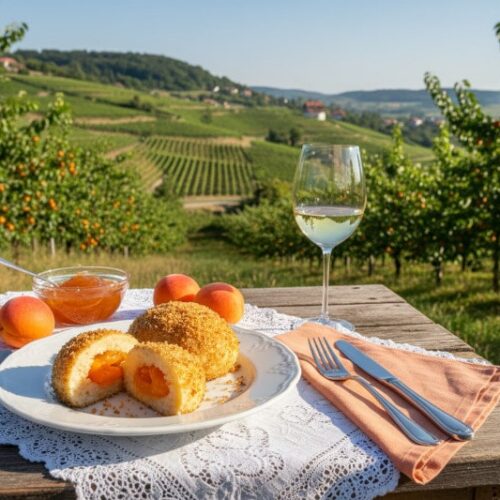
Wachau apricot dumplings
Cooking utensils
- 1 Large saucepan
- 1 Small pan for the breadcrumbs
- 1 Bowl for the dough
- 1 Skimmer
- 1 Small wooden spoon (for coring)
- 1 Cutting board
Ingredients
For the curd cheese dough
- 250 g Curd cheese Quark, well drained
- 1 Organic egg
- 50 g soft butter
- 100 g Flour Type 405 or coarse-grained flour
- 20 g Durum wheat semolina
- A pinch of salt
For the filling & breadcrumbs
- 6-8 small ripe apricots
- 6-8 Piece of sugar cube
- 100 g Breadcrumbs
- 50 g Butter
- 1 tablespoon granulated sugar
- 1 teaspoon cinnamon
- Powdered sugar for sprinkling
Preparation
Preparation of the dough
- Cream the soft butter with the egg and a pinch of salt.
- Fold in the curd cheese, then quickly work in the flour and semolina until you have a smooth dough.
- Cover the dough and leave to rest in the fridge for at least 30 minutes.
Preparing the fruit
- Meanwhile, wash and dry the apricots.
- Carefully press out the core with a wooden spoon handle without cutting the fruit completely.
- Place a piece of sugar cube in the center of the apricot instead of the stone.
Shape and cook the dumplings
- Shape the dough into a roll on a floured surface and cut into equal pieces.
- Press each piece of dough flat, place an apricot in the middle and enclose it in the dough. Roll into smooth dumplings with wet hands.
- Bring plenty of salted water to the boil in a large pan. Place the dumplings in the water and cook over a low heat for approx. 10-12 minutes until they float to the top.
The crumb shell
- In the meantime, melt the butter in a pan.
- Add the breadcrumbs, sugar and cinnamon and roast until golden brown, stirring constantly.
- Lift the finished dumplings out of the water with a slotted spoon, drain briefly and dip immediately in the warm breadcrumbs.
Recommended side dishes
- A fruity apricot roaster (boiled apricot pieces).
- A dollop of freshly whipped vanilla cream.
- A scoop of homemade vanilla ice cream as a temperature contrast.

