

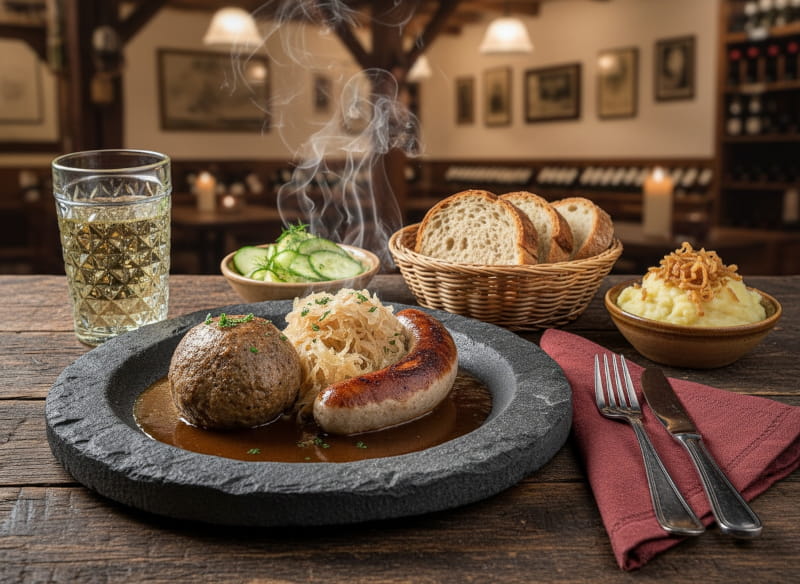
A rustic specialty from the Palatinate gourmet region
If you are looking for the perfect wine to accompany one of the most characterful specialties of the Palatinate, there is no way around the Schiefer Sack. The theme of wine and food is particularly celebrated in the region’s hospitable wine taverns with this dish, which combines two absolute classics of Palatinate cuisine. The Schiefer Sack consists of a spicy liver dumpling and a hearty fried sausage, served together on a bed of sauerkraut. This combination is a prime example of the down-to-earth butchery tradition of the Palatinate and offers a fascinating interplay of different textures and flavors. While the liver dumpling impresses with its soft consistency and fine herbal seasoning, the bratwurst provides the necessary bite and strong roasted aromas. The dish is rounded off with a dark sauce and fresh farmhouse bread, making it a filling and extremely popular meal. It is an honest meal that carries the history and joie de vivre of the Palatinate Wine Route and only unfolds its full splendor on the palate with the right wine accompaniment.
Ideal wine accompaniment: Pfalz Riesling QbA (Pfalz, Germany)
A Riesling from the Palatinate, traditionally served as a wine spritzer in a dubbe glass, is the ultimate partner for a Pfälzer Schiefer Sack. This combination is deeply rooted in regional culture, as the lively acidity of Riesling harmonizes perfectly with the heartiness of liver dumplings and bratwurst. The nose reveals aromas of yellow apple and white peach, which form a refreshing contrast to the spicy liver note and the strong sauce. The effervescence of the spritzer invigorates the palate and helps to elegantly balance the fat of the meat and the acidity of the sauerkraut. A dry quality Riesling also has the necessary structure and minerality to stand up to the intense spices such as marjoram and cloves. It is an uncomplicated yet highly functional pairing that ensures a high drinking flow and perfectly supports the rusticity of the dish. The wine spritzer not only acts as a thirst quencher here, but also as a flavorful bridge builder that lightens up the hearty components and makes the entire dish more digestible. A real slice of life that shows how harmoniously wine and food can merge in everyday life.
Further wine recommendations for Pfälzer Schiefer Sack
Palatinate Pinot Gris QbA (Palatinate, Germany)
A Pinot Gris from the Palatinate is the ideal choice for anyone who prefers a stronger and less acidic accompaniment to Schiefer Sack. With its aromas of ripe pear, honeydew melon and subtle nutty nuances, it particularly caresses the creamy character of the liver dumpling. The full body of this wine provides a wonderful foundation for the dark sauce and the roasted aromas of the sausage. It is very melting and harmonious on the palate, gently embedding the spice of the dish. A very full-bodied wine that underlines the hearty facets of Palatinate cuisine in an elegant and full-bodied way and ensures a rich enjoyment experience.
South Tyrol Vernatsch DOC (South Tyrol, Italy)
For red wine lovers, a Vernatsch from South Tyrol is a surprisingly suitable accompaniment to this sausage dish. As it is very low in tannins and has a fresh cherry aroma, it does not dominate the subtle nuances of the liver dumpling. The lively acidity of the Vernatsch goes perfectly with the sauerkraut and provides a pleasant freshness. This wine often has a subtle almond note, which interacts wonderfully with the herbal spice of the Schiefer Sack. It is a light and digestible red wine variant that works particularly well when served slightly chilled, which further emphasizes the conviviality of the Palatinate meal.
Pfalz Portugieser QbA (Palatinate, Germany)
Portugieser is a classic Palatinate wine that impresses with its unagitated and gentle style. It has aromas of red berries and a very mild acidity structure, making it an ideal partner for spicy home cooking. In combination with the Schiefer Sack, it acts as a calm companion that supports the hearty meaty notes without pushing itself to the fore. Its uncomplicated nature is perfectly suited to the atmosphere of a Palatinate wine tavern. This wine is a reliable partner for anyone who appreciates a harmonious and down-to-earth pairing that focuses entirely on the honest taste of the food.
Riesling Rheingau QbA (Rheingau, Germany)
A Riesling from the Rheingau brings an often steely minerality and a precise acidity that sets an exciting accent to the slate sack. The cool fruit of citrus and stone fruit acts like an aromatic spotlight on the herbs in the liver dumpling. Its clear structure provides an elegant counterpoint to the dense sauce and sausage. It enhances the rustic dish with its finesse and ensures a very clear finish. If you are looking for a slightly tighter wine pairing that challenges and refreshes the palate, you will find a very high-quality and dynamic taste experience with this classic German choice.
Blaufränkisch Burgenland DAC (Burgenland, Austria)
A Blaufränkisch from Burgenland is known for its spicy characteristics and dark berry fruit, which makes it an exciting international partner. The wine’s fine herbal spiciness directly picks up on the aroma of the liver dumpling, while the moderate tannins lend structure to the fried sausage. Its pronounced acidity also harmonizes excellently with the sauerkraut. This red wine has a certain earthiness that goes perfectly with the rustic foundation of the Schiefer Sack. It is a combination with a strong character that shows how well Austrian wine culture and Palatinate culinary tradition can merge to create a profound and long-lasting finish.
The recipe:
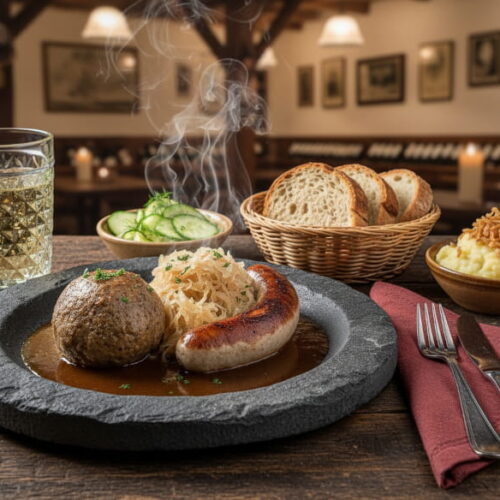
Pfälzer Schiefer Sack
Cooking utensils
- 1 Große Bratpfanne
- 1 Kleiner Suppentopf (für die Knödel)
- 1 Topf für das Sauerkraut
- 1 Schneidebrett und Messer
- 1 Schaumlöffel
Ingredients
Die Fleischkomponenten
Die Hauptkomponenten
- 2 Pfälzer Leberknödel roh oder vorgebrüht
- 2 Pfälzer Bratwürste grob
- 1 EL Butterschmalz zum Braten
Beilagen und Sauce
- 400 g Sauerkraut
- 100 ml Riesling trocken
- 1 kleine Zwiebel gewürfelt
- 250 ml dunkle Bratensauce oder Bratenfond
- 2 Scheiben rustikales Bauernbrot
- Salz Pfeffer, Lorbeerblatt, Wacholderbeeren
Preparation
Vorbereitung:
- Sauerkraut kurz abtropfen lassen.
- Zwiebel fein würfeln.
- Bratensauce vorbereiten oder erwärmen.
Kochschritte Beilagen:
- Etwas Fett im Topf erhitzen und Zwiebeln darin glasig dünsten.
- Sauerkraut, Lorbeer und Wacholder hinzugeben.
- Mit Riesling ablöschen und ca. 15 Minuten sanft köcheln lassen.
- Bratensauce separat erhitzen und bei Bedarf leicht binden.
Kochschritte Fleisch:
- Leberknödel in leicht siedendem (nicht kochendem) Salzwasser ca. 10–15 Minuten gar ziehen lassen.
- Butterschmalz in der Pfanne erhitzen.
- Bratwürste darin bei mittlerer Hitze goldbraun braten.
- Die fertigen Leberknödel kurz abtropfen lassen.
- Optional: Die Knödel für mehr Aroma kurz mit der Wurst in der Pfanne anbräunen.
Anrichten:
- Ein Bett aus Sauerkraut auf den Tellern anrichten.
- Je einen Leberknödel und eine Bratwurst darauf platzieren.
- Großzügig mit der dunklen Sauce übergießen.
- Mit einer Scheibe Bauernbrot servieren.
Empfohlene Beilagen:
- Ein Klecks mittelscharfer Senf
- Kartoffelstampf mit Röstzwiebeln
- Ein frischer Feld- oder Gurkensalat

