


Rustic finesse and spicy elegance in a creamy white wine reduction
If you’re looking for the perfect wine to pair with braised rabbit legs, you’ll inevitably end up with a very classic wine and food pairing. This dish impresses with the tender texture of the rabbit meat, which remains succulent thanks to the slow braising and deeply absorbs the spicy aromas of coarse mustard and fresh tarragon. It is a combination that calls for an accompaniment that can elegantly absorb both the spicy pungency of the mustard and the creamy richness of the sauce without overpowering the subtle nuances of the lean game meat. The challenge for every sommelier is to find a balance that perfectly balances the palate between the spicy depth of the sauce and the mineral freshness in the glass. A suitable wine must have enough structure to stand up to the acidity of the mustard, but at the same time bring an aromatic depth that communicates at eye level with the herbs in the pot. It’s a culinary experience that thrives on the harmony between French country cooking and a modern wine selection, where the choice of drop is crucial to preserve the identity of this dish and heighten the senses for every succulent bite.
Ideal wine accompaniment: Sauvignon Blanc Fumé Pfalz QbA (Pfalz, Germany)
A Sauvignon Blanc Fumé from the Palatinate aged in wooden barrels is the ideal answer to braised rabbit legs in a white wine and mustard sauce, as it perfectly reflects the smoky DNA of the dish. This wine is characterized by its characteristic notes of ripe gooseberries, elderflower and a subtle flinty minerality, which corresponds perfectly with the spicy mustard component and tarragon. As the stewing process gives the rabbit legs a very dense texture, the taut acid structure and the body of a Palatinate Sauvignon Blanc gained from the wooden barrel are needed to create a harmonious balance on the palate and elegantly parry the creaminess of the sauce. The often present subtle roasted notes in the wine act as an aromatic link that masterfully captures the hearty spiciness of the meat and puts it in a more elegant light. It is a pairing par excellence, in which the expressive fruit of the wine and the spicy depth of the dish merge into a majestic unity without suppressing the fine herbal aromas. The Sauvignon Blanc ensures that the mouthfeel remains pleasantly dynamic despite the richness of the mustard sauce, leading to a lingering and refreshing finish that perfectly combines rustic country cuisine with German wine culture and gently caresses the palate after every bite.
Further wine recommendations for this dish
Pouilly-Fumé AOC (Loire, France)
A classic Pouilly-Fumé from the Loire Valley is an elegant and highly precise alternative that responds directly to the mustard aromas in the dish with its smoky minerality. This wine captivates with striking notes of grapefruit, boxwood and the typical flint character, which brilliantly reflects the ethereal nuances of the tarragon in the casserole. The vibrant acidity structure of this French classic is crucial to break up the richness of the cream and mustard sauce on the palate and provide an invigorating mouthfeel. Anyone looking for a wine recommendation that impresses with its elegance and mineral strength will be delighted by this combination. The wine ensures that the subtle gamey notes of the rabbit are particularly emphasized and gives the dish a distinguished depth that makes every sip a harmonious experience and prepares the palate perfectly for the different textures, while the salty minerality lingers long into the finish.
Grüner Veltliner Kamptal DAC (Kamptal, Austria)
A powerful and peppery Grüner Veltliner from the Kamptal offers an excellent Austrian alternative that goes perfectly with the piquant spiciness of the mustard. This wine impresses with its typical pepperiness, aromas of white pepper, herbs and ripe pome fruit, which forms a wonderful counterpoint to the savory sauce. With its taut acid structure and often powerful extract, the Veltliner is very present on the palate and subtly balances out the creaminess of the mustard reduction. Anyone looking for a wine pairing based on strength and mineral spice will be fascinated by this combination, as the wine emphasizes the herbal notes in the dish without dominating the meat. It gives the rabbit a lively dynamic that makes every sip a refreshing experience and supports the aromatic depth of the stew right through to the finish, while the clear fruit provides balance.
Chenin Blanc WO Stellenbosch (Western Cape, South Africa)
An expressive Chenin Blanc from South Africa brings an exotic richness and a fine honey note to the pairing, which harmonizes excellently with the subtle sweetness of the rabbit meat. The aromas of yellow apple, quince and a hint of ginger complement the mustard sauce perfectly, while the oily texture of the wine effortlessly carries the cream component. Thanks to the natural acidity structure of the Chenin Blanc, the combination remains lively and fresh on the palate despite the wine’s body. It is an impressive wine pairing for anyone who loves playing with complex white wines and is looking for a combination that impresses with its fruit character and a certain warmth. The wine acts as a supple partner here, supporting the spicy nuances and at the same time ensuring a harmonious drinking flow thanks to its soft melting texture, perfectly rounding off the modern charm of this classic combination.
Pinot Noir Russian River Valley AVA (California, USA)
A Pinot Noir from the Russian River Valley offers a red wine option for those seeking a combination of silky tannins and ripe fruit. The flavors of black cherries, raspberries and a hint of wild mushrooms pick up the earthy nuances of the rabbit in an almost luxurious way without overpowering the mustard sauce. As the stew has a fine acidity from the white wine, an elegant Pinot Noir with a well-integrated structure can provide a wonderful counterbalance. Anyone looking for a wine pairing that impresses with its richness and a ripe fruit component will be fascinated by this combination, as the wine highlights the tender aspects of the meat in a noble light. The liaison between the full-bodied Pinot Noir and the spicy sauce creates a soft mouthfeel that perfectly links the various components of the dish and ensures an exceptional taste experience.
Chablis AOC (Burgundy, France)
A purist Chablis from Burgundy brings a chalky minerality and a steely freshness to the pairing, which harmonizes excellently with the herbal spiciness of the tarragon. The aromas of green apples, lemon zest and a salty note provide an exciting contrast to the richness of the mustard and cream sauce. Thanks to the high acidity and cool precision of this Chardonnay, the dish remains light and elegant on the palate, which is particularly welcome in a braised dish. It is a stylish choice for connoisseurs who appreciate the mineral side of French wine culture and are looking for a combination that impresses with its clarity and structure. The Chablis acts as a cool partner here, supporting the savory nuances while providing impressive length on the palate through its mineral vein, underlining the quality of the lamb and clearing the mouth for the next bite.
The recipe:
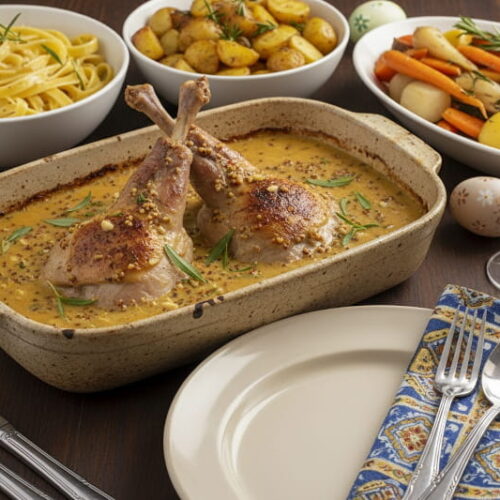
Braised rabbit legs in a white wine and mustard sauce
Cooking utensils
- 1 Casserole with lid
- 1 Chef’s knife
- 1 Cutting board
- 1 Cooking spoon
Ingredients
- 2 Rabbit legs à approx. 250 g
- 2 Tbsp clarified butter
- 1 Shallot finely diced
- 1 Garlic clove finely chopped
- 150 ml dry white wine e.g. Sauvignon Blanc
- 200 ml Poultry stock
- 2 Tbsp coarse Dijon mustard
- 100 ml Cream
- 2 Stalks of fresh tarragon chopped
- Salt and pepper from the mill
- 1 A pinch of sugar
Preparation
PREPARATION:
- Wash the rabbit legs and pat dry.
- Rub the legs well with salt and pepper.
- Finely dice the shallot and garlic.
- Chop the tarragon.
COOKING STEPS:
- Heat the clarified butter in a casserole.
- Fry the rabbit legs until golden brown on all sides.
- Remove the drumsticks from the pan and set aside briefly.
- Sauté the shallots and garlic in the frying fat until translucent.
- Deglaze with white wine and dissolve the drippings.
- Reduce the liquid by half.
- Stir in the chicken stock and mustard.
- Put the legs back into the pot.
- Cover and simmer over a low heat for approx. 45 to 50 minutes.
- Remove the legs from the sauce and keep warm.
- Add the cream to the pan and reduce the sauce until it thickens.
- Add fresh tarragon and a pinch of sugar.
- Season the sauce with salt and pepper to taste.
- Put the legs back into the sauce.
DIRECTIONS:
- Serve the rabbit legs on preheated plates.
- Pour the white wine and mustard sauce generously over the top.
- Garnish with a little fresh tarragon.
- Serve hot immediately.
SUPPLEMENTS:
- Wide ribbon noodles (tagliatelle)
- Baked potatoes with rosemary
- Steamed root vegetables

