


The archaic purity of Caucasian meat culture from Kakheti
If you’re looking for the perfect wine to accompany a dish that stands out for its absolute reduction to the essentials, khashlama is the ultimate choice. In the world of wine and food, this dish is considered the epitome of Kakhetian hospitality, with the quality of the meat being paramount. Khashlama is no ordinary stew, but a ritual meal in which large pieces of beef are simply cooked in water with salt and a few spices for hours until tender as butter. The secret lies in the patience and purity of the ingredients, which bring the unadulterated taste of the grazing beef to the fore. Traditionally, the meat is served on large platters and only refined with fresh mountain herbs such as coriander and parsley as well as coarse salt. This purist preparation calls for a wine pairing that has both strength and a fine structure to support the succulent meat and elegantly absorb the mineral salt notes without masking the subtle aromas of the gently cooked beef with too much fruit or extract.
Ideal wine accompaniment: Teliani (Kakheti, Georgia)
A Teliani from Georgia is the ideal answer to khashlama (simply cooked beef with herbs and salt). This wine is produced according to Georgian tradition from the Cabernet Sauvignon grape variety in the specific Teliani microzone in Kakheti and impresses with its noble structure and deep aromas. On the nose, the wine develops classic notes of blackcurrant, tobacco and cedar wood, which harmonize perfectly with the earthy characteristics of the cooked beef. As khashlama is a very honest and substantial dish without heavy sauces, the wine needs fine-grained tannins and a present acidity to balance the fat of the meat on the palate. The Teliani provides exactly this backbone and manages to pick up the mineral nuances of the coarse salt, while its subtle spiciness frames the fresh herbs perfectly. It’s a pairing based on structural elegance and shows how a Caucasian Cabernet-style red wine can enhance the purist power of the meat. The wine supports the juiciness of the beef without overwhelming it aromatically and ensures a long-lasting, harmonious finish that brings the quality of the raw materials into focus.
Further wine recommendations for Khashlama (simply cooked beef with herbs and salt)
Rioja DOCa Reserva (Rioja, Spain)
A Rioja DOCa Reserva offers a wonderful balance between mature fruit and fine spice, which is an excellent match for the gently cooked beef of the Khashlama. The characteristic notes of vanilla, leather and ripe wild berries, which result from the long barrel ageing, complement the pure meat aspects in a very elegant way. The crumbly structure of the tannins ideally underlines the tenderness of the beef, while the fine acidity of the Tempranillo provides freshness. It is a very classic choice for lovers of structured red wines who are looking for a European alternative and value an accompaniment that confidently frames the hearty simplicity of the khashlama and provides a round mouthfeel with its silky texture, which integrates the mineral salt notes of the dish wonderfully.
Barolo DOCG (Piedmont, Italy)
A Barolo DOCG made from the Nebbiolo grape impresses with its distinctive tannin structure and fine acidity, which forms a fascinating contrast to the juiciness of the cooked beef. The aromas of dried roses, tar and dark fruits form an aristocratic counterpoint to the rusticity of the Caucasian meat platter. The high concentration of Barolo in particular picks up on the intensity of the meat, which has been cooked for hours, and refines the dish to the highest level. It is a very sophisticated wine pairing that impresses with its clarity and strength. For connoisseurs, this wine offers the perfect balance between invigorating freshness and deep complexity, which harmonizes wonderfully with the fresh herbs and ensures a very precise taste experience that emphasizes the quality of the meat and cleanses the palate perfectly after every hearty bite.
Blaufränkisch Mittelburgenland DAC (Burgenland, Austria)
A Blaufränkisch from Mittelburgenland offers a wonderful dark berry fruit and a pithy spiciness that goes phenomenally well with the herbs and juicy meat of the Khashlama. With its distinctive tannins and lively acidity structure, it stands up well to the richness of the beef without overpowering its subtle intrinsic flavors. The mineral character of this Austrian wine corresponds perfectly with the coarse saltiness of the dish. It has enough extract to stand up to the strong pieces of pasture-fed beef and provides a full-bodied taste experience on the palate. An excellent choice for connoisseurs who prefer a characterful red wine with plenty of freshness, which ideally picks up on the earthy nuances of the meat and leaves a very honest, unadulterated mouthfeel that perfectly reflects the tradition of purism.
Syrah WO Stellenbosch (Western Cape, South Africa)
A Syrah from Stellenbosch brings a wonderful pepperiness and deep black olive flavors that are an excellent match for the simple profile of the Khashlama. With its notes of blackberry and smoke, it reflects the savory aspects of the beef and supports the mineral nuances of the broth in a very flattering way. The powerful structure of this South African wine lays perfectly over the delicate meat fibers and provides a full-bodied experience on the palate. It has enough body to accompany the succulence of the dish and adds an extra aromatic dimension to a simple meal. An excellent choice for lovers of dark fruit wines who are looking for an accompaniment that emphasizes the natural spiciness of the cooked meat and guarantees a harmonious finish thanks to its ripe tannins.
Cabernet Sauvignon Napa Valley AVA (California, USA)
A Cabernet Sauvignon from the Napa Valley provides an opulent yet structured accompaniment for the khashlama. With its intense aromas of blackcurrant, cedar and tobacco, it provides a powerful framework for the tender beef. The firm tannins and full body of this wine correspond excellently with the firm texture of the meat. The subtle roasted aromas that develop during the long cooking process are harmoniously mirrored by the often striking wood maturation. It is a very luxurious choice that impresses with its structure and ripe fruit. This wine lends an aristocratic touch to the simple meat dish and ensures a full-bodied experience that brings the juiciness of the khashlama to the fore and guarantees a long, dignified finish on the palate that is carried perfectly by the power of the Cabernet.
The recipe:
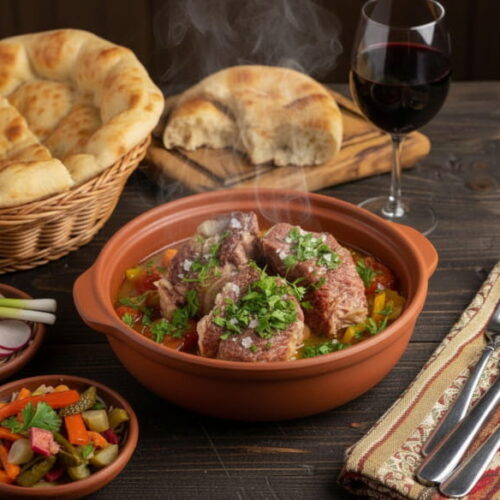
Khashlama (simply cooked beef with herbs and salt)
Cooking utensils
- 1 Large saucepan with lid
- 1 Skimmer
- 1 Knife
- 1 Cutting board
- 1 Meat fork
Ingredients
- 800 g Beef brisket or calf with bone and fat content
- 1 large onion
- 2 Bay leaves
- 1 teaspoon black peppercorns
- Coarse sea salt
- 1 bunch of fresh coriander
- 1 bunch of fresh parsley
- 1/2 bunch of fresh basil
- Water for infusion
Preparation
PREPARATION:
- Cut the beef into large pieces (approx. 100 to 150 g per piece).
- Peel and halve the onion.
- Wash and roughly chop the herbs.
- Prepare the bay leaves and peppercorns.
COOKING STEPS:
- Place the pieces of meat in a large pan.
- Fill the pan with cold water until the meat is completely covered.
- Bring the water to the boil and thoroughly remove the rising foam.
- Add the onion halves, bay leaves and peppercorns.
- Reduce the heat and simmer the meat with the lid closed for approx. 3 hours.
- The meat is ready when it can be easily separated with a fork.
- Only add a generous amount of salt 30 minutes before the end of the cooking time.
DIRECTIONS:
- Carefully lift the tender meat out of the stock with a slotted spoon.
- Arrange the pieces of meat on a large platter.
- Sprinkle generously with the coarse sea salt.
- Sprinkle the chopped fresh herbs over the meat.
- Pour a little hot cooking stock over the meat to keep it juicy.
- Serve immediately.
- It is traditionally served with bread and possibly some spicy mustard or horseradish.
SUPPLEMENTS:
- Georgian flatbread (puri)
- Fresh radishes and spring onions
- Pickled vegetables (Pkhali)

