

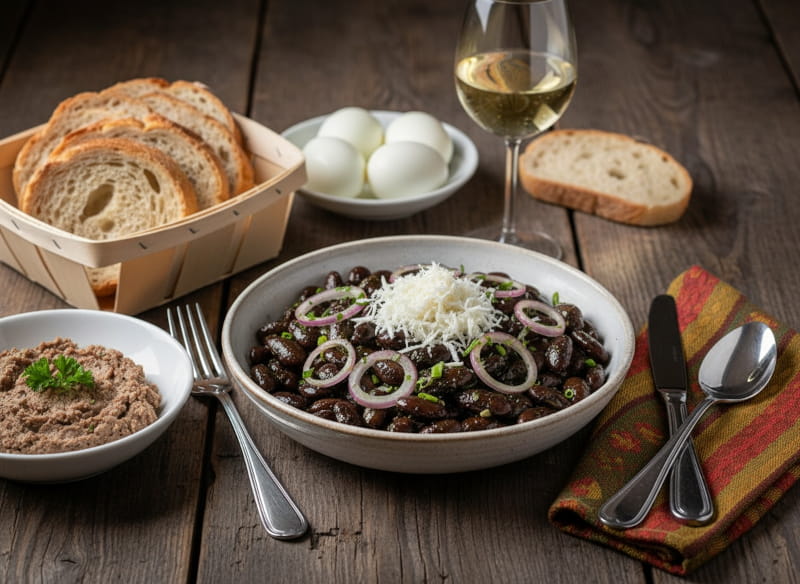
The nutty delicacy from Styria at the heart of snack culture
If you are looking for the ideal wine to accompany an authentic runner bean salad, you will come across an icon of Styrian cuisine. The theme of wine and food here is defined by the unique combination of creamy pulses, the deep green, nutty pumpkin seed oil and the sharp freshness of freshly grated horseradish. The scarlet runner bean, also known as the runner bean, is characterized by its stately size and delicate chestnut note. These powerful flavors call for an accompaniment that has enough structure to stand up to the distinctive oil and acidity of the vinegar without masking the subtle nutty nuances. It is a culinary experience that thrives on the balance between earthiness and freshness, with the regional origin of the wine often forming the most harmonious synergy to perfectly frame the intense aroma of this traditional salad and refine it into a well-rounded, down-to-earth moment of enjoyment that impresses both in the tavern and in fine dining.
Ideal wine accompaniment: Sauvignon Blanc Südsteiermark DAC (Styria, Austria)
A Sauvignon Blanc Südsteiermark DAC is the ideal accompaniment to a beetle bean salad (beetle beans with seed oil, vinegar, onions and horseradish). This wine is considered the flagship of the Styrian wine world and offers a sensory brilliance that harmonizes perfectly with the rusticity of the salad. On the nose, the Sauvignon Blanc unfolds a complex spectrum of gooseberries, elderflower and freshly cut grass, which forms a wonderful contrast to the earthy heaviness of the beans. As the pumpkin seed oil has a very dense, nutty texture, the racy acidity and fine minerality of this wine is needed to provide clarity and freshness on the palate. The green-spicy notes of the Sauvignon also perfectly pick up on the ethereal spiciness of the Kren, while the precise fruit elegantly integrates the acidity of the vinegar. It is a regional pairing par excellence, in which the aromatic intensity of the wine and the strong snack characteristics of the salad merge into a majestic unity that invigorates the palate and brilliantly underlines the nutty finish of the scarlet runner beans.
Further wine recommendations for this dish
Welschriesling Südsteiermark DAC (Styria, Austria)
A Welschriesling Südsteiermark DAC offers a wonderfully uncomplicated and sparkling accompaniment that is ideal for refreshing the mouthfeel after enjoying the intense seed oil thanks to its fine apple fruit and lively acidity. This wine impresses with its lightness and a subtle herbal spiciness, which remains discreetly in the background and lets the beetle beans take the lead. The mineral structure ensures that the combination always remains agile and easy to drink despite the creamy bean mass. Anyone looking for a classic Buschenschank combination that impresses with its freshness and straightforwardness will be delighted by this pairing, as the Welschriesling gently plays around the nutty components of the salad and provides a wonderful balance with a clear, citrusy finish that invites you to take the next bite.
Grüner Veltliner Weinviertel DAC (Lower Austria, Austria)
A Grüner Veltliner Weinviertel DAC brings an additional spicy dimension to the pairing with its characteristic pepper, which corresponds perfectly with the spiciness of the Krens. The aromas of white pepper, pome fruit and garden herbs perfectly complement the earthy characteristics of the beetle beans. Thanks to its taut acidity and spicy extract sweetness, this wine effortlessly absorbs the richness of the seed oil and provides a stable backbone against the acetic acid. It is an impressive wine accompaniment for anyone who loves to play with Austrian classics and is looking for a structured alternative to Sauvignon Blanc. The cool spiciness of the Veltliner ensures that the different flavor levels of the salad – from the nutty bean to the pungent root – are harmoniously combined.
Pinot Gris Vulkanland Steiermark DAC (Styria, Austria)
A Pinot Gris from the Styrian volcanic region is a somewhat stronger and melting choice, which is an excellent tactile match for the creamy consistency of the scarlet runner beans. The wine impresses with aromas of ripe pears, dried fruit and a fine nuttiness that wonderfully picks up on the chestnut notes of the bean. As wines from this region often have a fine smoky minerality, they harmonize beautifully with the deep aroma of the roasted pumpkin seed oil. It is a sophisticated wine accompaniment for connoisseurs who appreciate texture and fullness. The moderate acidity of the Pinot Gris blends well with the oil, while the full body of the wine ensures that it does not drown out the intense onion aromas, but acts as an equal partner and provides a very well-rounded taste experience.
Baden Pinot Noir QbA (Baden, Germany)
A dry Pinot Noir from Baden offers a fascinating red wine response to this salad, as long as it is not too heavy and has not been matured without dominant wood. The nose reveals red currants and sour cherries, providing a fruity counterpoint to the earthiness of the beetle beans. The fine tannin structure of the Pinot Noir perfectly binds the proteins of the beans, while the cool style of Baden Burgundy provides the necessary elegance. It is a modern wine recommendation for anyone looking for contrasts and who wants to emphasize the fruity side of the salad. The subtle spiciness of the wine supports the onion notes without overpowering the horseradish, resulting in a surprisingly harmonious liaison that provides pleasant moments of enjoyment, especially in autumn.
Rheinhessen Silvaner QbA (Rheinhessen, Germany)
A dry Silvaner from Rheinhessen is an underrated insider tip that builds a natural bridge to legumes with its earthy and herbal nuances. The wine impresses with a rather moderate acidity and aromas of ripe pear and meadow hay, which gently supports the nutty characteristics of the pumpkin seed oil. As Silvaner often has a fine mellowness and good grip, it offers a very harmonious accompaniment that does not push itself to the fore. It is a stylish choice for connoisseurs looking for a combination based on tranquillity and aromatic closeness. The down-to-earth nature of Silvaner reflects the rural origins of the Käfer bean and ensures a very balanced and authentic pleasure on the palate.
The recipe:

Scarlet runner bean salad (Styrian scarlet runner beans with seed oil and horseradish)
Cooking utensils
- 1 Large pot
- 1 mixing bowl
- 1 Grater (for the horseradish)
- 1 Knife
Ingredients
- 250 g Dried scarlet runner beans or 500 g cooked from the tin
- 4 tablespoon of Styrian pumpkin seed oil PGI
- 3 tablespoon apple cider vinegar naturally cloudy
- 1 small red onion
- 1 Piece of fresh horseradish Horseradish
- Salt and freshly ground pepper
- A pinch of sugar
- A dash of pumpkin seed oil to garnish
Preparation
PREPARATION:
- Soak the dried beans in plenty of water for at least 12 hours.
- Then pour off the soaking water.
- Rinse the beans under running water.
- Finely slice the red onion.
- Peel the horseradish fresh.
COOKING STEPS:
- Cook the beans in unsalted water for approx. 60 to 90 minutes until soft.
- They should be soft but still have a slight bite.
- Only add the salt towards the end of the cooking time.
- Drain the cooked beans and process while still lukewarm.
- For the dressing, mix together the vinegar, salt, pepper and a pinch of sugar.
- Slowly stir in the pumpkin seed oil until an emulsion forms.
DIRECTIONS:
- Mix the lukewarm beans with the dressing in a bowl.
- Fold in the onion rings or place them decoratively on top.
- Grate the fresh horseradish generously over the salad just before serving.
- Garnish with a few extra drops of seed oil.
- Ideally, leave the salad to stand for 10 minutes.
- Serve at room temperature.
SUPPLEMENTS:
- Fresh farmhouse bread
- Styrian minced meat
- Hard-boiled eggs

