


An autumnal classic with a velvety texture
Wine with food is a passion that comes into its own with a warming chestnut soup, especially in the cooler months of the year. The harmonious combination of wine and food in this Portuguese classic requires a sure instinct, as the nutty and slightly sweet aromas of the chestnut require a very specific accompaniment. Sopa de castanhas impresses with its creamy consistency and earthy depth, which is often complemented by a hint of fennel or cinnamon. This soup is a symbol of the autumnal harvest in the mountainous regions of Portugal and offers a complex flavor profile that oscillates between hearty creaminess and a subtle, natural sweetness. To round off this experience, you need a wine that has integrated acidity and ripe tones without overpowering the soup with too much fruit. It is a quiet pleasure that celebrates deceleration and envelops the senses with its comforting warmth, while the chestnuts can unfold their full power on the palate. Such a moment only becomes a perfect culinary poem with the right liquid accompaniment, which transports the autumnal atmosphere directly to the dining table.
Ideal wine accompaniment: Branco Douro DOC (Douro, Portugal)
A Reserva-style Douro Branco DOC is the perfect choice for this chestnut soup, as it has the necessary structure and complexity. These wines, which are often aged in wooden barrels, bring subtle toasted aromas and a creamy texture that blends seamlessly with the creaminess of the pureed chestnuts. The cuvée of traditional grape varieties such as Viosinho or Rabigato offers a lively minerality and a well-integrated acidity that lightens the dish and balances the natural sweetness of the chestnut. The contact with the oak creates subtle notes of vanilla and spices, which correspond perfectly with the earthy profile of the soup. The result is a harmonious interplay on the palate, in which the wine does not overpower the flavors of the food, but provides them with an elegant foundation. This combination underlines the sophisticated character of Portuguese cuisine and ensures a long-lasting, multi-faceted taste experience that combines the autumnal warmth of the soup with the cool elegance of the Douro wine region. The fine balance between strength and freshness makes this wine an indispensable partner for this sophisticated dish.
Further wine recommendations for this dish
Rheingau Riesling Spätlese trocken (Rheingau, Germany)
A mature Riesling from the Rheingau offers an intriguing combination of ripeness and lively acidity that goes perfectly with this soup. With age, the Riesling loses its youthful effervescence and gains complex notes of petrol, dried apricots and a fine herbal spiciness. These mature aromas find an equal partner in the nutty chestnut soup, while the remaining acid structure of the wine skillfully balances out the fat of the cream in the soup. The wine is powerful and long on the palate, emphasizing the earthy depth of the chestnuts without masking them with too much sweetness. It is a classic pairing for connoisseurs who appreciate the interplay between ripeness and freshness and want to present the soup in a new, elegant light. The mineral vein of the Rheingau slate also ensures a precise finish that contrasts wonderfully with the creaminess of the soup and elevates the overall taste experience to a very high level.
Chardonnay Leithaberg DAC (Burgenland, Austria)
This Chardonnay from the Leithagebirge is characterized by the chalky soils, which give it a taut minerality and a fine saltiness. Once this wine has been allowed to mature for a few years, the toasty notes of the wood ageing fade into the background and make way for a complex texture reminiscent of ripe pears and roasted nuts. These sensory characteristics harmonize perfectly with the aroma of roasted chestnuts in the soup. The fine acidity structure of the Chardonnay ensures that the combination remains lively despite the richness of the ingredients. The wine offers a creamy richness that picks up and extends the mouthfeel of the soup, while the chalky minerality provides an elegant counterpoint. The result is a very rounded and satisfying experience in which wine and food meet at eye level and reinforce each other’s complexity. The wine’s long finish is a wonderful match for the intense taste of sweet chestnut and turns every sip into a discovery of subtle nuances.
Savennières AOC (Loire, France)
A mature Chenin Blanc from the Savennières appellation is known for its enormous structure and often almost tart minerality. Over time, this wine develops fascinating notes of quince, lime blossom honey and straw, which build an extraordinary bridge to sopa de castanhas. The power and density of Savennières can easily keep up with the creaminess of a chestnut soup without going under. In particular, the often present but well-integrated acidity of the Chenin Blanc cuts through the richness of the soup and lends the dish an unexpected freshness. The wine is almost oily on the palate, which complements the texture of the soup wonderfully, while the tart, mineral tones on the finish balance the sweet facets of the chestnut. This French accompaniment brings an intellectual depth to the rustic recipe and makes for an exciting treat that goes far beyond the usual and interprets the earthy flavors of the soup in a very sophisticated way.
Verdicchio dei Castelli di Jesi Classico Riserva DOCG (Marche, Italy)
This Italian specialty reveals an impressive richness and a complex aroma of yellow fruit and almonds after a certain ageing period. It is precisely this almond note that goes so well with the nutty taste of the chestnut soup. Even as a Riserva, the Verdicchio retains a vital freshness that counteracts the heavy character of the soup and ensures a pleasant lightness. The structure of the wine is firm and long-lasting, making it an ideal partner for creamy stews or soups. An interplay of delicate fruit and a fine minerality unfolds on the palate, elegantly framing the soup. The wine does not push itself to the fore, but serves as an aromatic foundation that underlines the natural aromas of the chestnut and gives them room to develop. It is a Mediterranean interpretation of autumn enjoyment that impresses with its balance and harmony and rounds off the hearty dish with Italian elegance.
Blanco Reserva Rioja DOCa (Rioja, Spain)
A classically matured white Rioja Reserva, which has often spent years in wooden barrels, brings with it its very own world of aromas that go perfectly with chestnuts. Notes of vanilla, coconut, dried herbs and a pronounced oxidative style complement the nutty and earthy tones of the soup in an almost symbiotic way. The wine has a stable structure and an integrated acidity that perfectly supports the creaminess of the soup. The slightly smoky nuances, which many white Riojas possess, harmonize perfectly with roasted chestnuts or a soup that has been refined with a little bacon. On the palate, the wine is full-bodied and complex, creating a very luxurious mouthfeel in combination with the soup. This Spanish recommendation is ideal for connoisseurs who prefer powerful and characterful white wines that are capable of not only accompanying a hearty dish such as sopa de castanhas, but also elevating it to a new, festive level.
The recipe:
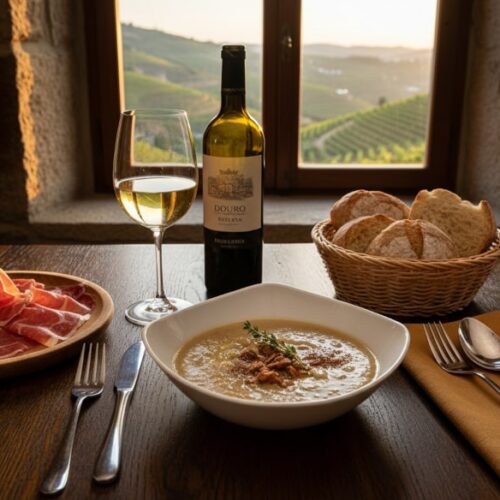
Sopa de castanhas (chestnut soup)
Cooking utensils
- 1 Large saucepan
- 1 Blender
- 1 Kitchen knife
- 1 Cutting board
Ingredients
The basis
- 400 g Sweet chestnuts Pre-cooked and peeled
- 1 Small onion finely chopped
- 1 small stalk of leek only the white, in rings
- 1 1 tbsp olive oil
- 600 ml Vegetable broth
The refinement
- 100 ml Cream
- 1 Pinch of cinnamon
- 1/2 teaspoon fennel seeds finely ground
- Salt and pepper from the mill
- A few drops of pumpkin seed oil or olive oil to garnish
Preparation
Steaming and cooking
- Heat the olive oil in a pan. Sauté the onions and leek in it until translucent, without letting them take on any color.
- Add the chestnuts (set a few aside for the garnish) and sauté briefly.
- Pour in the vegetable stock and simmer gently over a medium heat for about 20 minutes.
Puree
- Blend the soup with a hand blender until very smooth and creamy. If it is too thick, add a little more stock.
- Stir in the cream and allow the soup to come to the boil briefly.
Season to taste
- Season with salt, pepper, fennel and a tiny pinch of cinnamon. Roughly chop the remaining chestnuts and add to the plates.
- Serve garnished with a few drops of oil.
Recommended sides:
- Toasted country bread with salted butter
- A few strips of crispy fried pancetta (for non-vegetarians)
- A small dollop of crème fraîche

