
The rustic power of buckwheat at the heart of the Alpine farming tradition
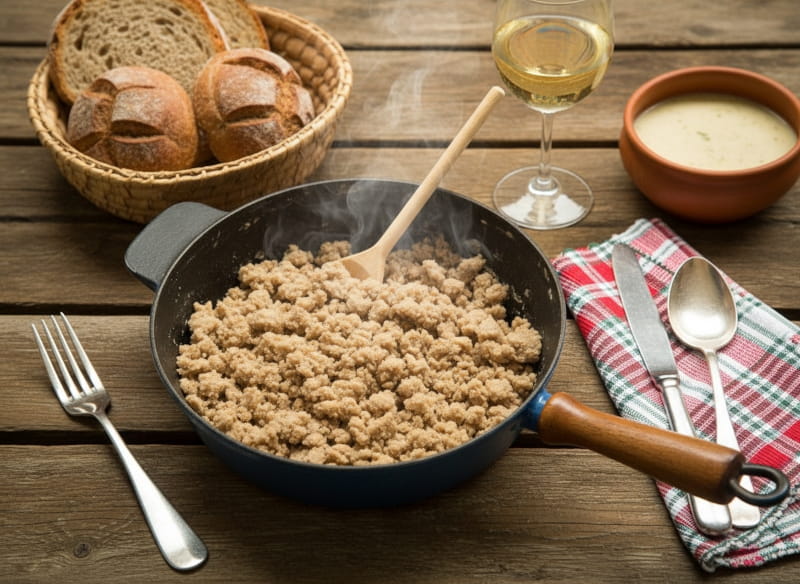
If you are looking for the perfect wine to accompany an authentic Heidensterz, you will come across a culinary heritage of Styria. The wine and food theme here is defined by the earthy nuttiness of buckwheat flour and the strong note of rendered pork lard with grammels. Heidensterz is an honest and full-bodied dish that calls for an accompaniment that can stand up to the aroma without overpowering the subtle bitter notes of the heather grain. The challenge for the sommelier is to balance the dry texture of the Sterz with a lively juiciness in the glass. It is a culinary experience that thrives on the harmony between down-to-earth satiety and an animating freshness, where the choice of wine is crucial to elegantly absorb the hearty roasted flavors of the lard and refresh the palate for the next forkful of this storied classic, while you can feel the deep connection to Styrian agriculture in every bite.
Ideal wine accompaniment: Gelber Muskateller Südsteiermark DAC (Styria, Austria)
A Gelber Muskateller Südsteiermark DAC is the ideal answer to Heidensterz (a savory dish made from buckwheat flour and lard). This wine is characterized by its unmistakable grapeiness and its intense bouquet of elderflower, nutmeg and fresh citrus notes, which forms a fascinating contrast to the earthy and almost tart characteristics of buckwheat. As Heidensterz has a very dense and fatty component due to the lard used, the taut acidity and extract-rich lightness of this wine are needed to create a harmonious balance on the palate. The floral aroma of the muscatel acts like an aromatic perfume that masterfully plays around the heavy roasted aromas of the gammel and puts the dish in a more elegant light. It is a regional pairing par excellence, in which the playful fruitiness of the wine and the rustic honesty of the mush merge into a majestic whole. The wine ensures that the dry texture of the buckwheat is wonderfully loosened up on the palate, leading to a long-lasting and refreshing finish that perfectly combines the rural tradition of Styria with modern wine culture.
Further wine recommendations for this dish
Welschriesling Südsteiermark DAC (Styria, Austria)
A Welschriesling from southern Styria offers a classically fresh and wonderfully straightforward accompaniment that goes perfectly with Heidensterz thanks to its fine apple fruit and animating acidity structure. This wine is characterized by its lightness, which forms a pleasant counterpoint to the strong and filling texture of the buckwheat flour. The subtle meadow herb notes on the nose harmonize wonderfully with the earthy depth of the heather grain. Anyone looking for an uncomplicated wine pairing that focuses on honest home cooking and refreshes the palate with a cool clarity will be delighted by this combination. The Welschriesling ensures that the Sterz remains digestible despite its richness and subtly emphasizes the rural elegance of the dish without dominating it aromatically, with the mineral note of the soil ideally supporting the nutty aspects of the grain.
Sauvignon Blanc Südsteiermark DAC (Styria, Austria)
A Sauvignon Blanc from southern Styria has an aromatic intensity that goes perfectly with the spicy components of bacon or gammel. With its typical nuances of paprika, gooseberry and freshly cut grass, the wine offers a green and lively contrast to the dark flour spice. The striking acidity of this wine is powerful enough to fight against the dense fat structure of the lard and provides enormous dynamism on the palate. It is a modern and very precise wine accompaniment for connoisseurs who appreciate aromatic fireworks and like to interpret the Heidensterz in a more piquant way. The Sauvignon Blanc particularly emphasizes the fine roasted aromas and gives the dish a contemporary and elegant note, with the mineral saltiness of the wine corresponding wonderfully with the salt structure of the Sterz.
Grüner Veltliner Weinviertel DAC (Lower Austria, Austria)
A Grüner Veltliner Weinviertel DAC brings an additional spicy dimension to the pairing with its characteristic pepper, which corresponds excellently with the hearty characteristics of the Heidensterz. The aromas of white pepper, garden herbs and local pome fruit perfectly complement the earthy characteristics of the buckwheat. Thanks to its taut acid structure, this wine can carry the fatness of the lard effortlessly and offers robust support against the strong roasted flavors of the pan. It is an impressive wine recommendation for anyone who loves to play with Austrian classics and is looking for a combination that impresses with structure and a certain piquancy. The Veltliner acts as a spicy partner here, supporting the nutty aspects of the buckwheat and at the same time ensuring an impressive length on the palate thanks to its mineral vein, which rounds off the rustic pleasure perfectly.
Rheinhessen Silvaner QbA (Rheinhessen, Germany)
A dry Silvaner from Rheinhessen is an underrated insider tip for grain-based dishes, as its fine earthiness creates a natural bridge to buckwheat. The wine impresses with a rather moderate acidity and a full-bodied texture that blends perfectly with the crumbly consistency of the grain. On the nose, there are often subtle notes of ripe pear and meadow hay, which wonderfully support the nutritious characteristics of the dish. It is a stylish choice for connoisseurs looking for an accompaniment based on harmony and depth rather than harsh contrasts. The down-to-earth nature of the Silvaner reflects the Sterz’s rural origins and makes for a very round, full-bodied taste experience in which the roasted aromas of the grain and the soft wine notes merge into a unity that gently envelops the palate.
Pinot Gris Vulkanland Steiermark DAC (Styria, Austria)
A Pinot Gris from the Styrian volcanic region has an almost smoky minerality and enormous power that effortlessly stands up to the full-bodied Heidesterz. The aromas of ripe pears, honeydew melon and dried nuts correspond excellently with the nutty nuances of the Heidekorn. This wine has enough extract and body to cushion the intensity of the grapes and at the same time increase the juiciness on the palate. The volcanic soil character gives the wine a tautness that adds complexity to the pairing. It is a luxurious wine pairing for connoisseurs who want to discover the powerful side of Styrian wine culture. The interplay of full-bodied fruit and mineral freshness makes for a full-bodied experience that perfectly combines the different textures of the wine and leads to a spicy, long-lasting finish.
The recipe:
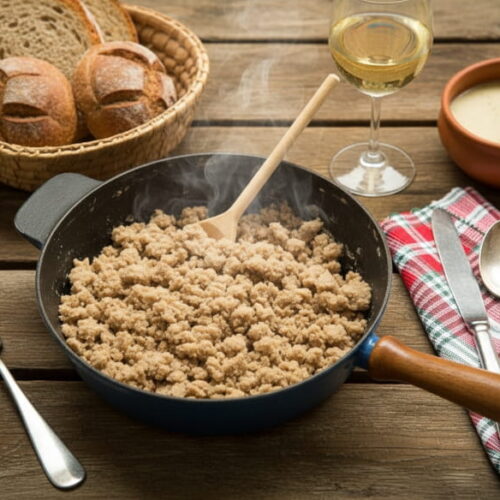
Heidensterz (traditional Styrian buckwheat ore)
Cooking utensils
- 1 Large cast iron pan
- 1 Cooking pot
- 1 Cooking spoon
- 1 Two forks (for cutting)
Ingredients
- 300 g Buckwheat flour Heidenmehl
- 500 ml Water
- 1 teaspoon salt
- 80 g Pork lard
- 50 g Grams Greaves
- A pinch of pepper
Preparation
PREPARATION:
- Weigh the buckwheat flour into a bowl.
- Bring the water to the boil in a pan with the salt.
- Prepare the grammels.
COOKING STEPS:
- Pour the flour into the boiling salted water to form a large cone of flour.
- Poke a hole in the center of the cone with a wooden spoon handle (the so-called “Sterzkoch”).
- Reduce the heat and simmer the sterz for approx. 15 minutes, covered.
- Pour off the excess water, but save a small amount for later.
- Use two forks to break the firm flour mixture into uneven, small pieces.
- Heat the lard in a cast iron pan.
- Fry the gherkins until crispy.
DIRECTIONS:
- Add the chopped pieces of sausage to the hot lard in the pan.
- Roast everything briefly, turning constantly, until the lard has been absorbed.
- Serve the Heidensterz in bowls or directly in the pan.
- Finish with a pinch of pepper to taste.
- Traditionally, it is often served with sour soup or coffee with milk.
SUPPLEMENTS:
- Sour soup (Klachelsuppe)
- Latte (for the sweet and tart version)
- Sour cream

