

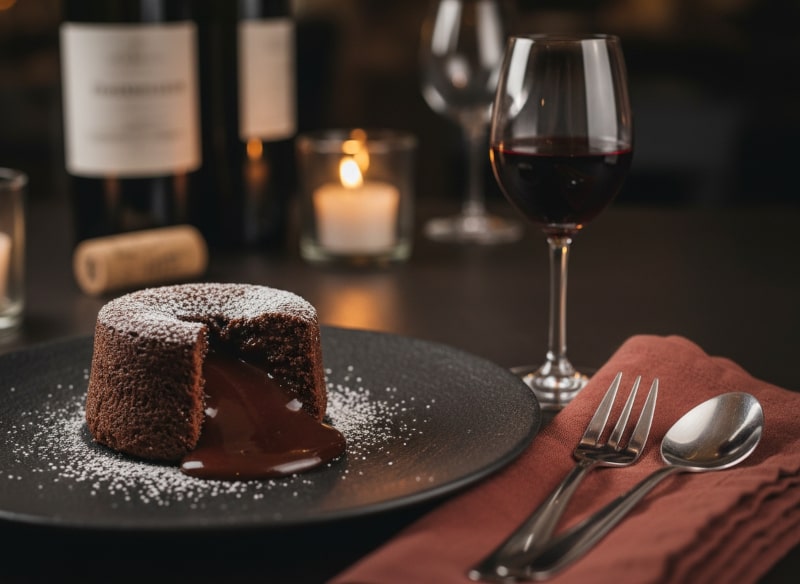
A sinful dessert dream made from the finest dark chocolate
The search for the perfect wine to accompany a meal often ends with the most difficult of all disciplines, namely accompanying a classic dessert with chocolate. A successful combination of wine and food requires special attention to the intensity and sweetness of the chocolate fondant with its seductively liquid center. This dessert is a tribute to French patisserie and impresses with the contrast between the firm, warm shell and the velvety filling. It is a culinary experience that comes to life through the use of high-quality dark chocolate with a high cocoa content and develops a deep, almost intoxicating aroma on the palate. The preparation requires precision when baking in order to hit the perfect moment when the inside is still liquid. Only when all the components interact harmoniously can this luxurious pleasure be created, which calls for a liquid accompaniment that is as powerful as it is elegant and stands up to the high fat content and bittersweetness. Every detail, from the temperature to the quality of the butter, contributes to making this dessert the undisputed star of any menu and making a lasting impression on guests.
Ideal wine pairing: Banyuls AOC (Roussillon, France)
The Banyuls AOC from sun-drenched Roussillon is the undisputed classic when it comes to accompanying dark chocolate desserts. As a Vin Doux Naturel, a naturally sweet fortified wine, it has the necessary strength and extract sweetness to stand up to the dominance of cocoa. The nose reveals intense aromas of dried plums, figs and dark berries, which blend wonderfully with the tartness of the dark chocolate. The fine roasted notes and nuances of coffee or chocolate in the wine itself directly pick up the aroma of the fondant and prolong the pleasure on the palate. Despite its sweetness, a good Banyuls has a fine tannin structure and an animating spiciness that prevent the combination from being too sticky or overloaded. The warmth of the alcohol supports the melting of the chocolate and ensures that the essential oils of the cocoa can develop optimally. It is a partnership that works as equals and brings both components to a harmonious finish that perfectly reflects the depth and complexity of French wine culture.
Further wine recommendations for this dish
Porto DOC (Douro, Portugal)
A Late Bottled Vintage or a full-bodied Ruby Port from the Douro Valley is an excellent choice for lovers of strong dessert combinations. This wine impresses with its deep red color and concentrated fruit aromas of black cherries and blackberries, which form a fruity contrast to the dark chocolate. Reinforced with brandy, it has a strong backbone that perfectly absorbs the melting core of the fondant. The silky tannins and natural residual sweetness harmonize perfectly with the texture of the cake and ensure a long, warming mouthfeel. The spicy notes of the port wine in particular, reminiscent of cloves and dark spices, give the dessert an additional aromatic dimension. It is a classic wine and food pairing that never goes out of fashion and impresses with its consistency and depth. The power of the Douro is reflected in every sip, making this pairing a real experience for all the senses that complements the heaviness of the chocolate heart in a very classy way.
Recioto della Valpolicella DOCG (Veneto, Italy)
This exceptional sweet wine, made from dried grapes, comes from the Veneto region and has an incredible density. The Recioto della Valpolicella offers a fascinating palette of aromas of preserved cherries, raisins and a hint of dark cocoa, making it the ideal partner for chocolate fondant. Its velvety texture and opulent sweetness flatter the liquid core of the dessert, while the fine acidity in the background provides the necessary balance. In contrast to fortified wines, Recioto is often somewhat softer and more berry-like, giving the dessert a playful note. The combination is characterized by a deep fruitiness that softens the bitter notes of the dark chocolate and leads to a round, flattering taste experience. It is a luxurious choice that combines the traditional Italian craftsmanship of the passito process with the finesse of a modern chocolate dessert, creating a delight at the table. Every sip tells of the Italian sun and the artisan care of the winemakers.
Pedro Ximénez DO Jerez-Xérès sherry (Andalusia, Spain)
A Pedro Ximénez sherry is probably one of the sweetest and most concentrated wines in the world and therefore goes perfectly with extremely chocolaty dishes. Its almost syrupy consistency and deep dark color are visually reminiscent of melted chocolate. Aromas of dates, figs, liquorice and molasses characterize this wine and form an incredible synergy with the liquid core of the fondant. Due to the enormous concentration, a small sip is often enough to intensify the aroma of the cocoa and drive it to unimagined heights. The roasted aromas of the sherry pick up on the baking aromas of the small cake and create a very dense, almost meditative taste experience. It is a bold choice that not only accompanies the chocolate fondant, but transforms it into a veritable explosion of flavor. This wine from Andalusia is the perfect choice for anyone looking for a finish that is hard to beat in terms of intensity and puts the dark spice of the chocolate center stage.
Pinot Noir Eiswein Pfalz QmP (Pfalz, Germany)
A red ice wine made from Pinot Noir from the Palatinate is a rare treasure that impresses with its precise acidity and concentrated red berry fruit. The natural cold during the harvest concentrates sugar and acidity in equal measure, giving the wine a vibrant energy. This freshness is an ingenious counterpoint to the heaviness of the butter and chocolate in the fondant. While the sweetness of the wine absorbs the tart notes, the lively acidity ensures that the palate is revitalized after every bite. The aromas of raspberry jam and rosehip lend the chocolate dessert an unexpected lightness and fruity elegance. This combination impressively demonstrates how top German wines can also play a leading role in the world of heavy desserts. The clarity and brilliance of the ice wine forms a fascinating contrast to the warm opulence of the cake and makes for a very delicate and sophisticated pairing that underlines the special character of the evening through its rarity.
Constantia WO (Coastal Region, South Africa)
From the traditional South African region of Constantia comes a dessert wine that was already highly prized at European royal courts in the 18th century. This wine, mostly made from Muscat de Frontignan, offers a beguiling nose of orange blossom, apricots and fine spices, which build a wonderful bridge to the chocolate fondant. The natural concentration of the grapes provides a viscous sweetness that gently envelops the bitter character of the dark chocolate and ensures a harmonious balance. The fresh sea breeze from the nearby Atlantic gives the wine a surprising acidity that makes the dessert seem very lively despite its richness. The exotic fruit component brings an exciting freshness to the combination, which works particularly well when the chocolate heart is still really warm and liquid. It is a majestic companion that represents the history of South African viticulture and makes the dessert a truly royal finale that lingers for a long time thanks to its complexity and melting texture.
The recipe:

Chocolate fondant with a liquid center
Cooking utensils
- 1 2 ovenproof ramekins (ramequins)
- 1 Bowl for the water bath
- 1 Hand mixer or whisk
- 1 Kitchen scales
- 1 Dough scraper
Ingredients
For the dough
- 100 g Dark chocolate at least 70 % cocoa content
- 80 g Butter
- 2 Eggs Size M
- 40 g Sugar
- 20 g Flour Type 405
- 1 Pinch of sea salt
- 1 Msp. vanilla pulp
For the ramekins
- A little butter for greasing
- Some baking cocoa for dusting
Preparation
Preparation
- Preheat the oven to 200 °C top/bottom heat. Grease two ovenproof ramekins thoroughly with butter and dust with baking cocoa. Remove excess cocoa by tapping lightly.
Melting the base
- Break the chocolate into small pieces and slowly melt together with the butter in a bowl over a warm bain-marie. Then set aside and allow to cool briefly so that the eggs do not set when stirred in.
Make the dough
- Beat the eggs with the sugar in a separate bowl until the mixture is light and creamy. Carefully fold in the chocolate and butter mixture. Finally, briefly fold in the flour, vanilla pulp and a pinch of salt until a homogeneous batter is formed.
Baking
- Pour the batter evenly into the prepared tins. Bake in the middle of the oven for approx. 10 to 12 minutes. The edges should be firm, while the center should still jiggle when gently shaken. Remove from the oven, leave to rest for 1 minute and carefully turn out onto plates.
Recommended side dishes
- A scoop of classic vanilla ice cream
- Fresh raspberries or a fruit mirror made from berries
- A gossamer veil of powdered sugar

