

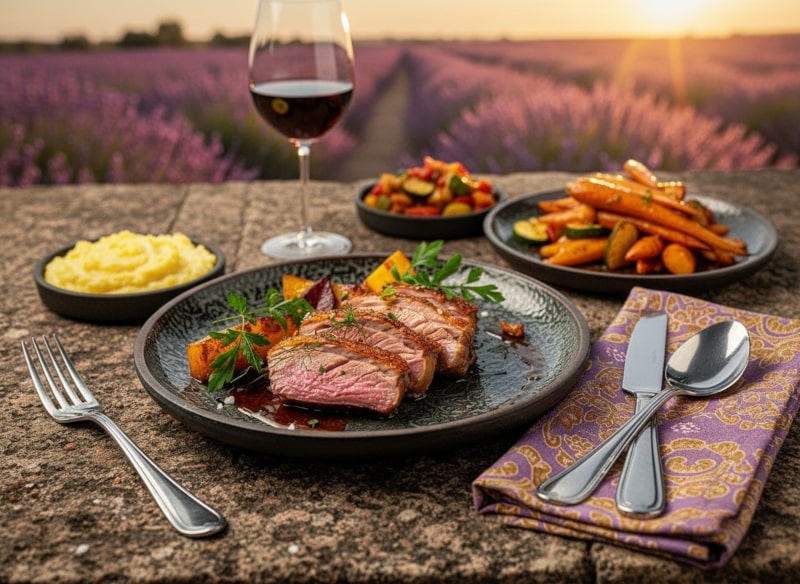
Provence flair on a plate: an aromatic journey of pleasure
Choosing the right wine to accompany your meal is the key to an unforgettable culinary evening, especially with such a fine dish. In fine dining, wine and food pairing plays a central role in perfectly showcasing the complex flavors of a pink roasted duck breast. This recipe combines the hearty meat texture of the duck with the floral sweetness of lavender honey and the ethereal spice of fresh thyme. The skin of the duck is baked until crispy, while the meat remains juicy and the glaze gives it a glossy, aromatic crust. The lavender note gives the whole dish an elegant lightness reminiscent of a summer’s day in the south of France. It is a dish for connoisseurs that impresses with its balance of sweetness, acidity and spice and will impress every guest. The preparation requires precision when roasting, but rewards you with a depth of flavor that will be remembered for a long time. The honey glaze caramelizes the skin in a way that is a highlight on any festive table, both visually and in terms of taste.
Ideal wine pairing: Châteauneuf-du-Pape AOC (Southern Rhône, France)
A Châteauneuf-du-Pape AOC is the majestic answer to the multi-layered aromas of this duck breast, as its powerful structure and characteristic garrigue spice harmonize perfectly. The cuvée, which is often dominated by Grenache, brings a ripe red fruit that elegantly absorbs the sweetness of the lavender honey without being overpowered by it. In particular, the notes of dried herbs, thyme and rosemary, which are typical of the wines of the southern Rhône, reflect the herbal component of the dish one-to-one. The silky yet present tannins of the wine cut wonderfully through the fat of the duck skin and cleanse the palate after every bite. The wine also has a mineral depth that gives the dish additional grip. The slight warmth of the alcohol supports the spicy glaze and ensures a long-lasting, warm finish. The result is an aromatic symbiosis in which neither the wine nor the food dominate, but rather elevate each other to a new, higher level of taste that radiates pure luxury. The complexity of the wine discovers new nuances in the honey and thyme crust with every sip.
Further wine recommendations for this dish
Blaufränkisch Mittelburgenland DAC (Burgenland, Austria)
A Blaufränkisch from Burgenland offers an exciting contrast to honey-glazed duck breast with its dark berry fruit and striking acidity structure. The fine extract sweetness of the wine harmonizes with the lavender honey, while the robust structure of the Blaufränkisch stands up to the strong duck meat. In particular, the typical blackberry note and the fine pepper spice complement the essential oils of thyme in a fascinating way. This wine has a certain coolness and elegance that prevents the dish from being too heavy. The mineral character, often reminiscent of graphite, lends the combination a modern and precise note. An excellent companion for anyone looking for a lively interaction between fruit and spice. The fine tannins integrate seamlessly into the juicy flesh and ensure a balanced finish that subtly emphasizes the floral lavender notes.
Mendoza Malbec (Mendoza, Argentina)
This Malbec from the high altitudes of Mendoza has opulent plum fruit and a velvety texture that clings beautifully to the creamy honey and thyme glaze. Its dark color and intense aromas of violets and chocolate provide a luxurious accent to the pink meat of the duck. The tannins here are often soft and well integrated, underlining the melting texture of the duck breast. As the lavender honey has a floral note, it finds a direct partner in the floral nuances of a first-class Malbec. The power of the wine ensures that it can stand up to the strong sauce of the duck without losing its elegance. A pairing that impresses with its opulence and harmonious fullness. The wine is almost like a liquid dessert on the palate, skillfully framing the hearty components of the duck and creating a warm, comforting sensation.
Tinto Priorato DOCa (Catalonia, Spain)
A wine from Priorat, characterized by the region’s slate soils, offers enormous concentration and a smoky minerality that goes excellently with the roasted aromas of the duck skin. The Garnacha and Cariñena grape varieties provide a dense framework of dark fruit and balsamic notes that perfectly frame the lavender. The powerful structure of the wine calls for an equally intense dish, with the honey sweetness of the duck wonderfully buffering the strong tannins of the Priorat. The result is a very profound taste experience characterized by herbs, stone and ripe fruit. This wine brings a Mediterranean heat that brings the soul of thyme and lavender to the fore and enhances the dish. The density of the wine calls for slow moments of enjoyment, in which the texture of the meat combines with the power of the slate and leaves a long echo on the palate.
Pinot Noir Ahr QbA (Ahr, Germany)
A Pinot Noir from the steep slopes of the Ahr has a fine smokiness and an elegant cherry fruit that builds a delicate bridge to the duck. The slate minerality and the often fine wood notes harmonize perfectly with the tart spiciness of the thyme. Compared to the heavier wines, Pinot Noir offers a dancing lightness that makes the dish very digestible. The acidity of the wine is complemented here by a fine berry aroma that gently caresses the lavender honey without dominating it. It is a very precise combination that focuses on subtleties and nuances and shows how well German red wines go with sophisticated poultry cuisine. The wine has a very clarifying and animating effect on the palate, which ensures a pleasant freshness, especially with the fatty duck skin. A pairing rich in finesse that emphasizes the delicate fibres of the meat.
Brunello di Montalcino DOCG (Tuscany, Italy)
A Brunello di Montalcino from the Sangiovese grape is an aristocratic companion that shines with its firm structure and aromas of leather, tobacco and red fruits. These tart and spicy notes form a grandiose counterpoint to the floral sweetness of the lavender honey. The striking acidity of the Brunello is ideal for balancing the fat of the duck and keeping the palate fresh. In combination with the thyme, the wine often develops ethereal notes reminiscent of Tuscan herb gardens. It is a classic pairing that focuses on structure and longevity and gives the duck breast an almost monumental stature. A wine that needs time to open up and then allows the dish to shine in all its facets. The ripe tannins give the meat a stable frame, while the fruit component brings the glaze to the fore.
The recipe:
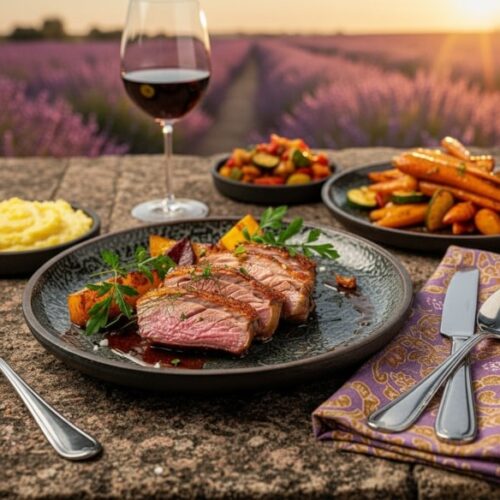
Duck breast with lavender honey & thyme
Cooking utensils
- 1 ovenproof pan
- 1 Sharp knife
- 1 Meat thermometer
- 1 Small pot for the glaze
- 1 Kitchen brush
Ingredients
The duck
- 2 Duck breast fillets approx. 200-250 g each
- Sea salt
- Black pepper from the grinder
The glaze
- 2 Tbsp high-quality lavender honey
- 4 Sprigs of fresh thyme
- 1 Shallot finely chopped
- 100 ml Red wine best a Rhône wine
- 50 ml Duck stock or poultry stock
- 1 tablespoon cold butter
Preparation
Preparation and roasting
- Cut the skin of the duck breasts with a sharp knife in a diamond shape, but do not cut into the meat.
- Place the duck breasts skin side down in a cold pan.
- Set the heat to medium so that the fat comes out slowly and the skin becomes crispy (approx. 8-10 minutes). Drain off some of the fat.
Glazing and cooking
- Turn the duck breasts and sear on the meat side for approx. 2 minutes.
- Gently heat the lavender honey with the plucked thyme leaves in a small pan.
- Brush the skin side of the duck generously with the honey.
- Place the pan in the oven preheated to 180°C and cook the duck to a core temperature of 54-56°C (approx. 6-8 minutes).
Sauce and resting
- Remove the duck from the pan and leave to rest wrapped in aluminum foil for 5 minutes.
- In the meantime, sauté the chopped shallot in the roasting juices until translucent, then deglaze with the red wine and stock.
- Reduce the sauce until it thickens slightly. Add the cold butter and season with salt and pepper to taste.
- Slice the duck and serve with the sauce.
Recommended sides:
- Creamy polenta with parmesan
- Honey-glazed carrots
- Classic ratatouille

